Why I'm Building Nexa: One AI Platform to Replace 10 Subscriptions
Visual Showcase
Click any image to explore the gallery in full screen
About This Project
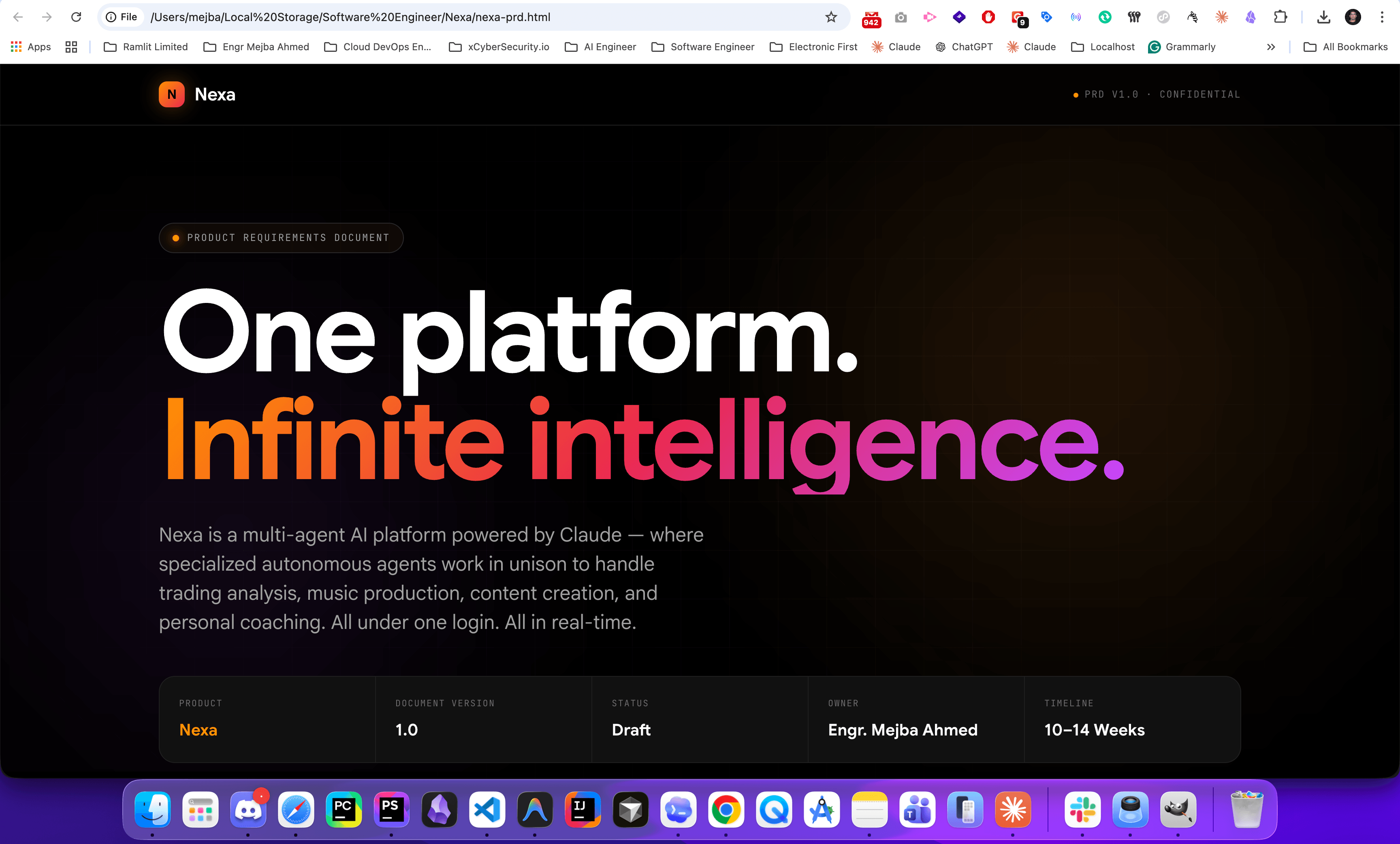
Most people pay for a stack of separate AI subscriptions that don't talk to each other. Nexa is a multi-agent AI platform I'm building, powered by Claude, to replace that fragmentation with one workspace where specialized agents share context and work together.
Four agents, each with its own isolated knowledge base (pgvector), custom tools, autonomous multi-step workflows, and a real-time streaming chat interface: a Trading Analyst that backtests strategies and surfaces insights, a Music Producer for creative production, a Content Strategist trained on brand voice, and a Life Coach grounded in the user's own journals. The architecture leans on the Claude Agent SDK for reliable tool use and reasoning.
The build is documented in public as a working record of real production engineering — architecture trade-offs, prompt patterns, RAG pipelines, and the bugs along the way.
Stack: Next.js 14, TypeScript, NestJS, Prisma, PostgreSQL 16 + pgvector, Redis/BullMQ, Anthropic Claude + Agent SDK, Clerk, Stripe, Turborepo.
Project Details

Enjoyed this project breakdown?
A coffee fuels more open-source work, tutorials, and detailed case studies like this one.
Like What You See?
Check out more projects or let's discuss how I can bring your vision to life with the same attention to detail.