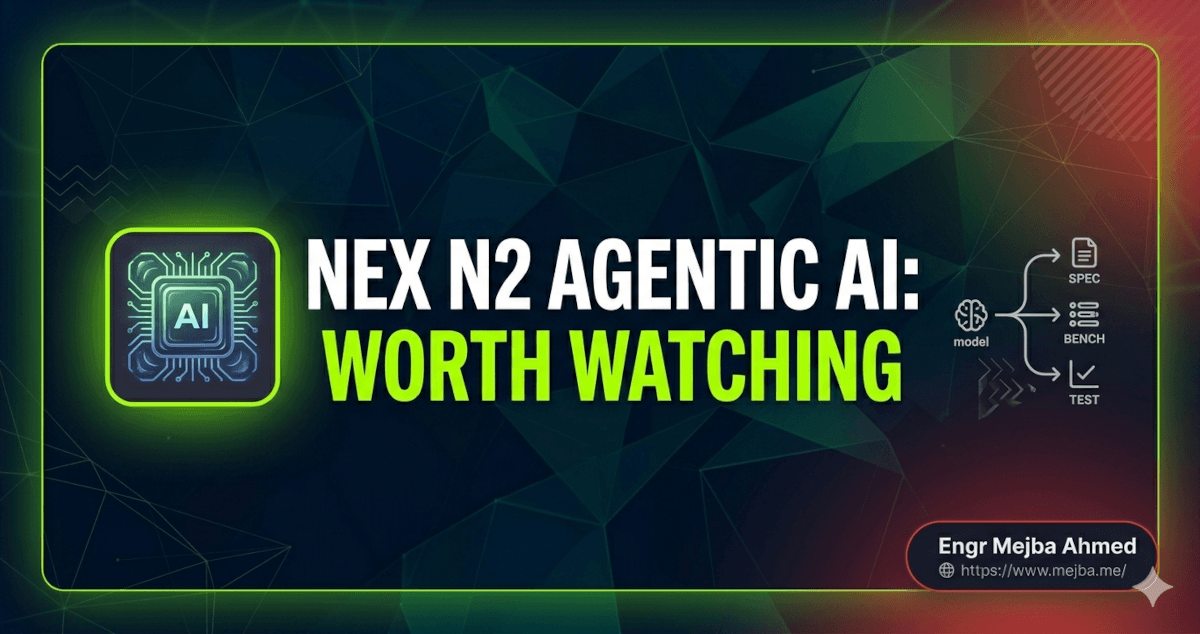
Ein chinesisches Labor, von dem ich noch nie gehört hatte, veröffentlichte am 2. Juni 2026 ein Open-Weight-Modell mit 397 Milliarden Parametern, behauptete, es habe Claude Opus 4.7 in einem Coding-Benchmark geschlagen, und verschenkte es kostenlos unter Apache 2.0. Mein erster Instinkt war derselbe wie jedes Mal, wenn ein neuer "GPT-Killer" in meinem Feed auftaucht: mit den Augen rollen und weiterscrollen.
Dann las ich die Model Card genauer. Nex N2 — das Open-Source-agentische KI-Modell eines Teams namens Nex AGI — verkauft sich nicht als schlauerer Chatbot. Es ist um etwas Spezifischeres herum gebaut: das Zusammenführen von Programmierung, Suche, Tool-Nutzung, Debugging und Selbstverifikation in einer einzigen durchgehenden Reasoning-Schleife, anstatt sie als separate Fähigkeiten anzubolzen. Das ist eine genuie andere Designentscheidung, und das ist der Teil, der Aufmerksamkeit verdient.
Also hier ist, was dieser Beitrag tatsächlich ist. Ich habe Nex N2 nicht in Produktion gegen die Codebasis eines zahlenden Kunden laufen lassen, und ich werde nicht so tun, als hätte ich es getan. Was ich getan habe, ist die veröffentlichten Spezifikationen zu lesen, die offiziellen Benchmark-Behauptungen, die unabhängigen Reviews und die praxisnahen Berichte — und all das durch Jahre des lokalen Betreibens von Open-Source-Modellen zu filtern und zuzusehen, wie Benchmark-Zahlen auseinanderfallen, sobald echte Arbeit auf sie trifft. Die Benchmark-Schlagzeilen sehen unglaublich aus. Die unabhängige Realität ist komplizierter. Beides ist gleichzeitig wahr, und Sie müssen verstehen warum, bevor Sie dieses Ding an irgendetwas anschließen, das wichtig ist.
Was Nex N2 tatsächlich ist (und warum "agentisch" hier kein Marketing ist)
Die meisten Modelle, die Sie verwendet haben, behandeln agentisches Verhalten als Nebensache. Das Basismodell lernt Sprache, und dann wickelt jemand es in ein Gerüst — eine Schleife, die sagt "rufe jetzt dieses Tool auf, lies jetzt das Ergebnis, entscheide jetzt, was als nächstes kommt." Das Reasoning und das Handeln leben in separaten Boxen, zusammengenäht durch Prompt Engineering und ein Framework wie LangChain oder das Claude Agent SDK.
Nex N2 kehrt das um. Nex AGI nennt es Agentic Thinking — eine einzelne geschlossene Schleife, in der das Modell eine Anforderung versteht, die Aufgabe plant, die Implementierung schreibt, das Feedback der Umgebung liest, bewertet ob es funktioniert hat, debuggt und iteriert. All das geschieht innerhalb eines Reasoning-Paradigmas statt über eine Kette separater Aufrufe. Dem Modell wird nicht gesagt zu handeln; Handeln ist Teil seiner Denkweise.
Es gibt zwei Teile dieses Frameworks, die es wert sind, benannt zu werden. Adaptive Thinking lässt das Modell selbst entscheiden, wann es tief nachdenken und wann es einfach weitermachen soll — einen simplen Shell-Befehl sofort ausführen, aber abbremsen und gründlich nachdenken vor einer Entscheidung, die teuer rückgängig zu machen ist. Coherent Thinking hält einen konsistenten Reasoning-Stil über allgemeine Fragen und agentische Aufgaben hinweg aufrecht, sodass das Modell nicht zwischen "gesprächigem Assistenten" und "Tool-aufrufendem Roboter" hin und her springt, je nachdem was man fragt.
Warum ist das für Sie wichtig? Weil die Workflows, die die meisten Agents zum Scheitern bringen, die gemischten sind. Die Aufgabe, die zu 40% Code schreiben ist, zu 30% Docs durchsuchen, zu 20% Terminal-Befehle ausführen und zu 10% den eigenen Fehler auffangen — und ein dutzend Mal zwischen diesen Modi wechseln, bevor sie erledigt ist. Ein Modell mit Reasoning und Handeln verschmolzen in einer Schleife hat einen strukturellen Ansatz dafür. Ein Modell mit einem angebolzten Agent-Gerüst verliert typischerweise den Faden.
Das ist die Theorie. Die Spezifikationen verraten uns, ob das Labor tatsächlich etwas gebaut hat, das dies umsetzen kann.
Mini vs Pro: die zwei Modelle, und welches auf Ihrer Hardware läuft
Nex N2 kommt in zwei Größen, beide mit offenen Gewichten und quantisierten Versionen für lokalen Einsatz.
Nex N2 Mini ist ein Mixture-of-Experts-Modell mit 35 Milliarden Parametern (eine Qwen3.5-35B-A3B-Basis) mit ungefähr 3 Milliarden aktiven Parametern pro Token. Das MoE-Design ist der ganze Sinn der "aktive Parameter"-Zahl — das Modell enthält 35B an Gesamtwissen, aktiviert aber nur eine kleine Expert-Untermenge bei jedem Token, sodass es weit leichter läuft als ein dichtes 35B-Modell. Mit einem quantisierten Build ist Mini die Variante, die Sie realistisch auf eine Workstation mit einer ordentlichen GPU ziehen und offline betreiben können.
Nex N2 Pro ist das Flaggschiff: ein MoE mit 397 Milliarden Parametern, gebaut auf Qwen3.5-397B-A17B, das 17 Milliarden Parameter pro Token aktiviert. Es nimmt sowohl Text- als auch Bildeingaben, produziert Textausgabe und unterstützt Reasoning, Function Calling und strukturierte Outputs — das komplette Toolkit, das Sie für eine echte agentische Umgebung wollen würden. Die Schlagzeilenzahl, die Aufmerksamkeit erregt, ist das Kontextfenster.
Nex N2 Pros Kontextfenster beträgt 262.000 Tokens, mit einer Ausgabe von bis zu 256.000 Tokens. Das reicht aus, um eine substanzielle Codebasis, eine lange Aufgabenhistorie und einen Stapel Dokumentation gleichzeitig im Arbeitsspeicher zu halten — genau das, was ein Agent für lange Horizonte braucht, wenn er zwölf Schritte in einen Build hinein ist und es sich nicht leisten kann, Schritt eins zu vergessen.
Ein Detail, das die eigenen Outputs des Modells verraten: es produziert Ergebnisse im GPT-Stil, ein Fingerabdruck des destillierten Trainings auf GPT-ähnlichen Modellen. Sie werden es in der UI bemerken, die es generiert, und in der Art, wie es Code strukturiert. Kein Fehler, nur ein Kennzeichen — und ein nützliches, wenn Sie versuchen herauszufinden, woher die Instinkte eines Modells kommen. Wenn Sie Zeit damit verbracht haben, wie sich verschiedene Open-Source-Modelle verhalten, ist dies dieselbe Art von Abstammungserkennung, auf die ich mich in meinem DeepSeek V4 Pro Open-Source-Review gestützt habe, wo die Trainingsherkunft leise alles Nachgelagerte formt.
Die Qwen-Abstammung zählt ebenfalls. Auf Alibabas Qwen3.5-Basis aufzubauen bedeutet, dass Nex N2 ein kampferprobtes Fundament erbt, anstatt bei null anzufangen — was teilweise erklärt, warum ein Labor, von dem die meisten Menschen nie gehört haben, so schnell etwas so Leistungsfähiges ausliefern konnte.
Spezifikationen sind Versprechen. Benchmarks sind dort, wo die Versprechen getestet werden — und wo sich die Geschichte in zwei teilt.
Die Benchmark-Behauptungen: was Nex AGI sagt, dass Nex N2 kann
Lassen Sie mich zuerst die offiziellen Zahlen darlegen, klar dem Team zugeschrieben, denn sie sind der Grund, warum überhaupt jemand über dieses Modell spricht. Dies sind die von Nex AGI gemeldeten Ergebnisse, keine unabhängige Verifizierung — behalten Sie diese Unterscheidung im Hinterkopf.
Auf Terminal-Bench 2.1, das testet, wie gut ein Modell tatsächlich in einem Terminal operieren und echte Engineering-Aufgaben erledigen kann, erzielt Nex N2 Pro angeblich 75,3 — vor Claude Opus 4.7 mit 69,7, DeepSeek-V4-Pro mit 72,0 und GLM-5.1 mit 58,7. Dass ein Open-Weight-Modell den Spitzenplatz bei der Terminal-Ausführung gegenüber Opus beansprucht, ist die Art von Ergebnis, das gescreenshotet und geteilt wird.
Auf SWE-Bench Pro, der schwierigeren Variante des Software-Engineering-Benchmarks, die ein Modell auffordert, echte Bugs in echten Repositories zu fixen, erzielt Nex N2 Pro angeblich 58,8 — knapp über GPT-5.5 mit 58,6. Auf dem gebräuchlicheren SWE-Bench Verified meldet das Team 80,8, was solide im Frontier-Territorium liegt.
Noch ein paar vom offiziellen Blatt. Auf GDPval — einer langfristigen, wirtschaftlich fundierten Evaluation, die bewertet, wie gut ein Modell realistische mehrstufige professionelle Arbeit bewältigt — landet Nex N2 Pro angeblich bei etwa 1585. Bei browserbasierten agentischen Aufgaben beansprucht Nex AGI Ergebnisse vor DeepSeek V4 Pro und GLM 5.1. Bei Tool-Calling-Evaluierungen meldet das Team durchweg starke Zahlen.
Zum Nennwert genommen ist dies ein kostenloses, Open-Weight, lokal lauffähiges Modell, das sich mit den teuersten proprietären Systemen auf dem Markt messen kann. Wenn Sie die Open-Source-Welle verfolgt haben — dieselbe Welle, die ich behandelt habe, als Kimi K2.6 als ernsthaftes offenes Coding-Modell landete — wissen Sie, dass dies die Entwicklung ist, die alle vorhergesagt haben. Die Kluft zwischen offen und geschlossen wird immer kleiner.
Hier ist der Haken, den niemand screenshotet.
Warum unabhängige Tests Nex N2 viel niedriger einstufen als die Schlagzeilen
Benchmark-Zahlen vom Labor, das das Modell gebaut hat, sind Marketing, bis jemand anders sie reproduziert. Und wenn unabhängige Evaluatoren Nex N2 durch härtere, reale Bedingungen schicken, ändert sich die Geschichte.
Das Muster, das sich in unabhängigen Tests zeigte: Nex N2 rangiert um Platz #12 insgesamt — nirgends in der Nähe der Top-Five-Platzierung, die die offiziellen Benchmarks implizieren. Seine Leistung ist konsistent, aber konsistent gut ist nicht dasselbe wie kategorieführend. Unter den kontrollierten Bedingungen eines veröffentlichten Benchmarks glänzt das Modell. In unordentlicheren, realen Evaluierungen mit adversariellen Aufgaben und Randfällen pendelt es sich in der oberen Mitte des Feldes ein.
Dies ist kein Nex-spezifischer Skandal. Es ist das zuverlässigste Muster im gesamten Modell-Veröffentlichungszyklus, und ich habe es ein Dutzend Mal beobachtet. Labs melden Scores unter ihrer Best-Case-Konfiguration, mit ihren Prompts, bei ihrer Auswahl an Aufgaben. Dann trifft das Modell auf Ihren tatsächlichen Workflow — Ihre eigenartige Repo-Struktur, Ihre halb dokumentierte interne API, Ihr mehrdeutiges Ticket — und die Zahl, die auf der Folie wichtig war, hört auf wichtig zu sein. Ich habe genau diese Kluft zwischen Leaderboard-Scores und echtem Codierverhalten über mehrere Modelle hinweg in meiner DeepSeek V4, GLM5 und Autonomie-Analyse untersucht, und die Lektion dort gilt hier sauber: Vertrauen Sie den unabhängigen Läufen, nicht dem Launch-Deck.
Es gibt einen zweiten, strukturellen Haken. Nex N2 ist langsam. Dieselbe Agentic-Thinking-Schleife — das Planen, das Selbstprüfen, das Iterieren während der Generierung — ist genau das, was das Modell durchdacht macht, und es ist auch das, was es seine Zeit brauchen lässt. Jeder Selbstverifikationsdurchlauf sind mehr Tokens, die generiert werden, bevor Sie eine Antwort bekommen. Wenn das Modell während der Generierung denkt, plant, debuggt und seine eigene Arbeit überprüft, warten Sie. Für eine interaktive Codier-Sitzung, in der Sie eine Antwort in zwei Sekunden wollen, ist diese Latenz eine echte Belastung. Für einen nächtlichen autonomen Build, bei dem Ihnen Korrektheit wichtiger ist als Geschwindigkeit, ist es ein fairer Handel. Wissen Sie, welchen Sie betreiben, bevor Sie das Modell beurteilen.
Wie entscheiden Sie also tatsächlich, ob dieses Ding Ihre Zeit wert ist? Sie schauen sich an, was es baut.
Was Nex N2 baut: die Demos, die bestehen, und die, die es nicht tun
Das ehrlichste Signal über jedes Code-Generierungs-Modell ist nicht sein Benchmark — es ist das, was es produziert, wenn Sie ihm einen echten Bauauftrag geben. Die Demonstrationen, die für Nex N2 kursieren, erzählen eine erfrischend gemischte Geschichte, was genau das ist, was sie glaubwürdig macht.
Auf der Plusseite: Nex N2 generierte eine funktionale Front-End-UI mit dynamischen Elementen und Animationen, die echt poliert aussah — der GPT-Stil-Fingerabdruck, der in sauberer, moderner Gestaltung durchscheint. Es baute ein voll funktionsfähiges Tower-Defence-Spiel, die Art von zustandsbehaftetem, interaktivem Projekt, das die Schwächen eines Modells schnell offenlegt, wenn seine Logik wackelig ist. Es produzierte eine SVG-basierte Lavalampen-Simulation mit echter Physik und Bewegung, keinen statischen Farbverlauf, der so tut, als wäre er Animation. Wenn Sie es mit detaillierten, beschreibenden Prompts und elementspezifischen Anfragen füttern, passt es sich gut an und respektiert die Vorgaben.
Am beeindruckendsten und am aufschlussreichsten: Nex N2 baute Betriebssystem-Klone — Windows 95 und Mac OS — komplett mit Startmenüs, funktionierenden Apps, einem Paint-Tool, einem Taschenrechner, einem Browser und einer MS-DOS-Eingabeaufforderung. Das ist eine enorme Menge an koordiniertem Zustand und UI, die kohärent generiert werden muss.
Aber die Risse zeigen sich genau dort, wo man sie erwartet. Die obere Leiste des Mac-OS-Klons war nicht funktional — die Elemente renderten wunderschön und taten nichts. Ein angefordertes Rennspiel kam mit nicht funktionierenden Funktionen zurück — das Gerüst war da, das Verhalten nicht. Dies ist die Signatur eines starken, aber nicht makellosen Code-Modells: es nagelt die Struktur und die Oberfläche fest und lässt dann die Verdrahtung bei den schwierigeren interaktiven Teilen fallen. Sie bekommen etwas, das zu 95% fertig aussieht und funktional zu 70% fertig ist, und die letzte Lücke zu schließen ist Ihre Aufgabe.
Diese Lücke ist das ganze Spiel, wenn Sie ein Codier-Modell für echte Arbeit evaluieren. Eine Demo, die fertig aussieht, ist einfach. Eine Demo, die tatsächlich fertig ist, ist der schwere Teil, und Nex N2 — wie fast jedes Modell auf dieser Stufe — bringt Sie den größten Teil des Weges und bittet Sie, den Rest zu erledigen. Wenn Sie ein tieferes Gespür dafür entwickeln möchten, wie ich "sieht fertig aus" von "ist fertig" trenne, wenn ich KI-gebaute Interfaces bewerte, habe ich genau diese Unterscheidung in meinem Claude Design-zu-Website Workflow-Review durchgearbeitet.
Wenn Sie bis hierher gelesen haben, wissen Sie bereits mehr über Nex N2 als die meisten Leute, die seine Benchmark-Screenshots teilen. Hier erfahren Sie, wie Sie es tatsächlich in die Hände bekommen.
Wie Sie Nex N2 jetzt ausprobieren können (kostenlos, drei Wege)
Sie müssen niemandem auf's Wort glauben — auch mir nicht. Nex N2 ist offen und zugänglich genug, dass Sie sich heute Nachmittag Ihre eigene Meinung bilden können. Hier sind die drei realistischen Wege, geordnet vom geringsten zum größten Aufwand.
1. OpenRouter (kein Setup, kostenloser Tier). Nex N2 Pro ist auf OpenRouter verfügbar, und während des Startfensters im Juni 2026 ist es auf dem kostenlosen Tier für $0,000 pro Million Input- und Output-Tokens gelistet. Wenn Sie bereits Modelle über OpenRouter routen, ist dies ein einzeiliger Model-ID-Tausch. Ich habe dieses exakte Gateway-Muster durchlaufen — Ihr bestehendes Tooling auf OpenRouter zeigen und das Modell darunter austauschen — in meinem Claude Code mit OpenRouter Leitfaden, und dasselbe Setup gilt hier. Zeigen Sie Ihren Agent auf nex-agi/nex-n2-pro:free und los geht's.
2. Gehostete Anbieter (kostenlose Launch-Promotions). Neben OpenRouter haben mehrere Inference-Anbieter — SiliconFlow und andere — Nex N2 Pro aufgegriffen und kostenlosen oder unbegrenzten Zugang während des Startfensters angeboten. Das Flaggschiff wurde als kostenlos mit unbegrenzter Nutzung für eine Einführungsperiode über Benchmark- und Evaluierungsplattformen beworben. Diese Promotions sind zeitlich begrenzt, also wird das "kostenlos unbegrenzt"-Fenster nicht ewig dauern — wenn Sie das Pro-Modell ohne zu bezahlen stresstesten wollen, ist jetzt der Moment.
3. Lokaler Einsatz (Mini, quantisiert). Hier beweisen offene Gewichte ihren Wert. Sowohl Mini als auch Pro haben offene Gewichte und quantisierte Builds, und Nex N2 Mini ist dasjenige, das realistisch auf lokaler Hardware läuft, dank seiner 3B aktiven Parameter. Ziehen Sie ein quantisiertes GGUF oder Äquivalent, laden Sie es in LM Studio oder Ollama, und Sie haben ein agentisches Modell, das vollständig offline läuft — kein API-Key, kein Rate Limit, keine Daten, die Ihre Maschine verlassen. Wenn Sie noch nie ein lokales Modell eingerichtet haben, behandelt mein Gemma 4 lokales KI-Setup in LM Studio exakt denselben Workflow Schritt für Schritt; tauschen Sie die Modelldatei aus und der Prozess ist identisch.
Ein praktischer Hinweis zu den kostenlosen Promotions: behandeln Sie sie als genau das, was sie sind. Kostenloser Startzugang ist ein Feature, keine Zusage. Bauen Sie Ihren Workflow so, dass er nicht von einem kostenlosen Tier abhängt, das in drei Wochen verdampft — behalten Sie die lokale Mini-Option als Rückfallposition, denn die ist für immer kostenlos unter Apache 2.0.
Diese Klausel für kommerzielle Nutzung ist es wert, einen Moment innezuhalten, denn sie verändert die Kalkulation vollständig.
Das Apache 2.0-Detail, das für Entwickler wirklich zählt
Hier ist der Teil, bei dem jeder Solo-Gründer oder jede kleine Agentur aufhorchen sollte. Nex N2 wird unter Apache 2.0 ausgeliefert — sowohl Mini als auch Pro. Das bedeutet, dass Sie es kommerziell nutzen, modifizieren, fine-tunen und selbst hosten können, ohne eine Lizenzgebühr zu zahlen oder jemandes Erlaubnis zu fragen.
Vergleichen Sie das mit der proprietären Frontier. Opus und GPT-5.5 sind außergewöhnlich, und ich bezahle für sie, wenn Zuverlässigkeit nicht verhandelbar ist. Aber Sie besitzen sie nicht. Ihr Zugang ist ein Abonnement, Ihre Kosten skalieren mit der Nutzung, und Ihre Daten fließen durch die Server anderer Leute. Für ein Kundenprojekt mit strengen Datenresidenz-Anforderungen oder ein Produkt, bei dem Pro-Token-Kosten Ihre Marge auffressen würden, ist ein selbst gehostetes Apache-2.0-Modell kein Downgrade — es ist die einzig machbare Architektur.
Das ist die wahre Geschichte unter dem Benchmark-Drama. Ob Nex N2 auf Platz #5 oder #12 steht, ist fast nebensächlich. Ein Open-Weight, kommerziell lizenziertes, agentisches Modell, das konsistent gut ist und auf Ihrer eigenen Hardware läuft, ist eine andere Kategorie von Nützlichkeit als ein proprietäres Modell, das marginal besser und völlig außerhalb Ihrer Kontrolle ist. Dieselbe Logik trieb die Migration an, die ich dokumentierte, als Teams begannen, ernsthafte Workflows auf kostenlosen und offenen Modellen aufzubauen, anstatt standardmäßig die teuerste Option zu wählen.
Wo Nex N2 in Ihren tatsächlichen Workflow passt
Lassen Sie mich spezifisch werden, wen es interessieren sollte, denn "vielversprechendes Open-Source-Modell" hilft niemandem, eine Entscheidung zu treffen.
Verwenden Sie Nex N2, wenn Sie autonome, langfristige agentische Workflows bauen, bei denen Korrektheit wichtiger ist als Geschwindigkeit, Sie ein großes Kontextfenster benötigen, um eine ganze Codebasis zu halten, Sie Datenresidenz- oder Kostenbeschränkungen haben, die proprietäre APIs ausschließen, oder Sie ein leistungsfähiges Modell vollständig offline betreiben möchten. Die verschmolzene Reasoning-und-Handeln-Schleife ist eine echte Passung für gemischte, mehrstufige Aufgaben, die einfachere Agents zum Scheitern bringen.
Greifen Sie nicht zu Nex N2, wenn Sie Sub-Sekunden-interaktive Antworten brauchen (die Selbstprüfungsschleife macht es langsam), Sie Arbeit erledigen, bei der die oberen 5% der Fähigkeit den Unterschied zwischen Ausliefern und Nicht-Ausliefern ausmachen, oder Sie die "sieht fertig aus, ist nicht fertig"-Lücke bei komplexen interaktiven Komponenten nicht tolerieren können. Dafür verdient die proprietäre Frontier weiterhin ihren Aufpreis.
Und egal was das offizielle Leaderboard sagt, verankern Sie Ihr Urteil an den unabhängigen Ergebnissen und Ihren eigenen Tests. Die #12-Realität ist nützlicher für Sie als die Top-Five-Behauptung, denn #12-aber-konsistent-und-kostenlos-und-Ihres ist ein Werkzeug, auf dem Sie tatsächlich ein Geschäft aufbauen können.
Es gibt eine Frage, die es wert ist, darüber nachzudenken, während Sie entscheiden, ob Sie heute Abend die Gewichte herunterladen: Wenn ein Modell, das Sie vollständig besitzen und kostenlos betreiben, Sie 85% des Weges zur Frontier-Fähigkeit bringt, wie viel sind diese letzten 15% — der Teil, den Sie mieten, der Teil, der seine Preise oder Bedingungen ändern kann, ohne Sie zu fragen — tatsächlich wert für das, was Sie bauen?
Häufig gestellte Fragen
Ist Nex N2 wirklich kostenlos nutzbar?
Ja — Nex N2 ist Open-Weight unter der Apache 2.0-Lizenz, also ist es für immer kostenlos zum Herunterladen, Selbsthosten, Modifizieren und kommerziellen Verwenden. Darüber hinaus wurde Nex N2 Pro während seines Startfensters im Juni 2026 über OpenRouters kostenlosen Tier und mehrere gehostete Anbieter kostenlos angeboten, obwohl diese Promotionsfenster zeitlich begrenzt sind.
Wie schneidet Nex N2 im Vergleich zu Claude Opus 4.7 ab?
Nach Nex AGIs eigenen Benchmarks erzielt Nex N2 Pro angeblich 75,3 auf Terminal-Bench 2.1 gegenüber Opus 4.7s 69,7. Aber unabhängige Tests stufen Nex N2 um Platz #12 insgesamt ein, deutlich unter der Top-Tier, in der Opus sitzt — behandeln Sie also die direkten Benchmark-Siege mit Vorsicht und verlassen Sie sich auf unabhängige Evaluierungen.
Kann ich Nex N2 auf meinem eigenen Computer ausführen?
Ja, Nex N2 Mini ist für den Betrieb auf lokaler Hardware konzipiert. Sein 35-Milliarden-Parameter Mixture-of-Experts-Design mit nur 3 Milliarden aktiven Parametern, plus quantisierte Builds, lässt es auf einer leistungsfähigen Workstation-GPU über Tools wie Ollama oder LM Studio laufen — vollständig offline. Das 397B Pro-Modell benötigt ernsthafte Hardware oder einen gehosteten Anbieter.
Warum ist Nex N2 langsamer als andere Modelle?
Nex N2 ist langsam, weil es während der Generierung denkt, plant, debuggt und selbstverifiziert, anstatt sofort zu antworten. Diese iterative Agentic-Thinking-Schleife produziert zuverlässigere Langzeitergebnisse, generiert aber weit mehr Tokens, bevor sie eine Antwort zurückgibt, was ein fairer Handel für autonome Arbeit und eine echte Belastung für interaktives Codieren ist.
Was macht Nex N2 "agentisch" im Vergleich zu anderen Modellen?
Nex N2 verschmilzt Programmierung, Suche, Tool-Nutzung, Debugging und Verifikation in einer durchgehenden Reasoning-Schleife, anstatt sie als separates Gerüst anzubolzen. Sein Agentic Thinking-Framework mit Adaptive und Coherent Thinking lässt Reasoning und Handeln innerhalb desselben Paradigmas stattfinden — ein struktureller Vorteil für gemischte, mehrstufige reale Workflows.
Lassen Sie uns zusammenarbeiten
Möchten Sie KI-Systeme aufbauen, Workflows automatisieren oder Ihre Tech-Infrastruktur skalieren? Ich helfe gerne.
- Fiverr (maßgeschneiderte Builds & Integrationen): fiverr.com/s/EgxYmWD
- Portfolio: mejba.me
- Ramlit Limited (Enterprise-Lösungen): ramlit.com
- ColorPark (Design & Branding): colorpark.io
- xCyberSecurity (Sicherheitsdienste): xcybersecurity.io