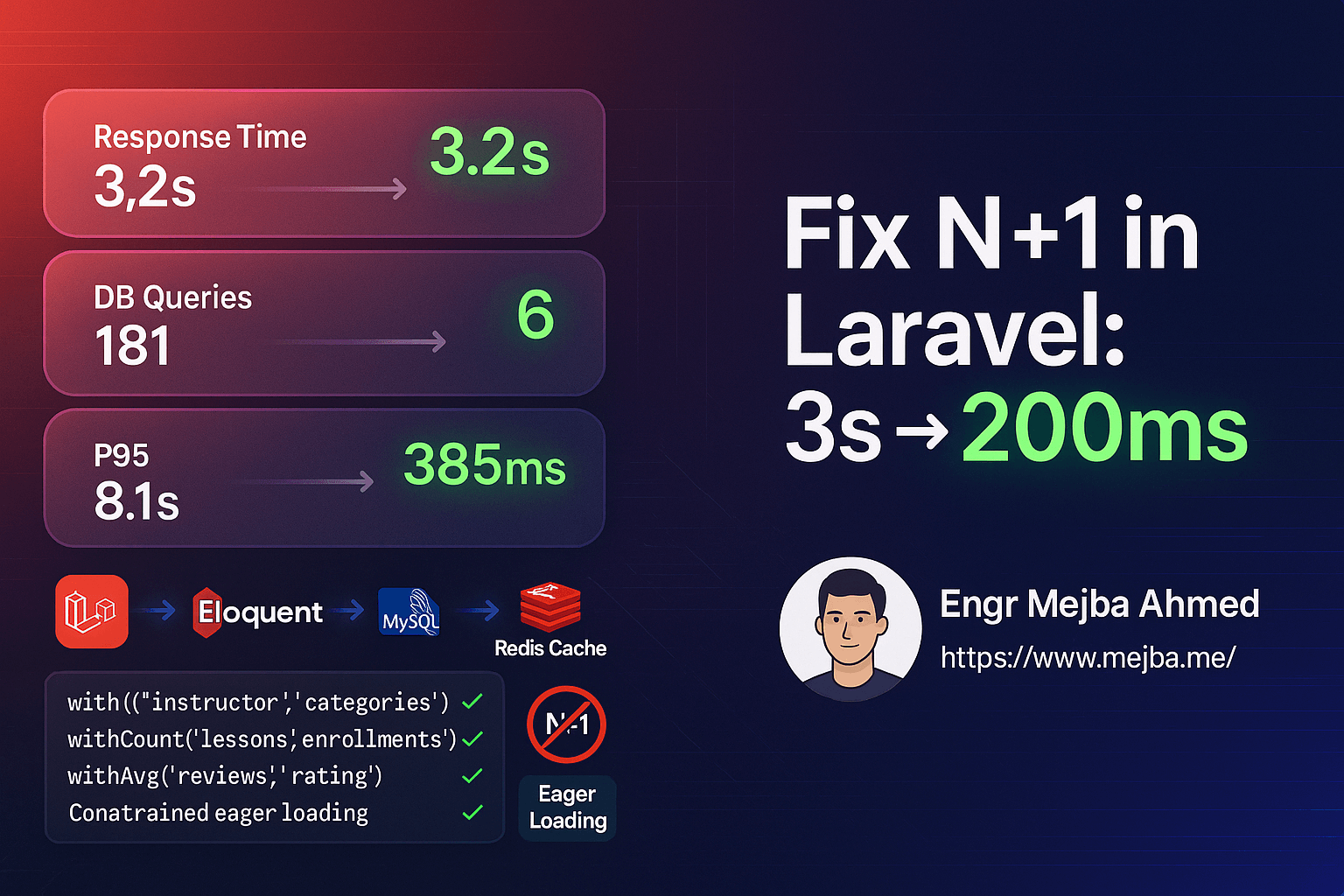

Vier Sekunden. So lange dauerte das Laden einer einzelnen Admin-Seite in einem Kundenprojekt, das ich letztes Jahr betreute.
Der Schuldige war kein fehlender Index. Es war keine N+1-Query. Es war ein firstOrCreate-Aufruf — vollkommen normal aussehender, unscheinbarer Laravel-Code — bei dem das Array der Erstellungsattribute einen API-Aufruf an einen externen Abrechnungsdienst und eine Hash-Operation enthielt. Beide wurden bei jeder Anfrage ausgewertet. Selbst wenn der Benutzer bereits existierte. Selbst wenn nichts erstellt wurde.
Ich fand den Bug nach fast einer Stunde dd()-Aufrufen und langsamem Durchscrollen der Laravel Debugbar-Timeline. Als es endlich klickte, fühlte ich diese spezifische Mischung aus Erleichterung und Verlegenheit, die nur entsteht, wenn man realisiert, dass der Bug nicht unsichtbar war, weil er clever war — sondern weil ich nicht verstand, wie PHP-Argumentauswertung tatsächlich funktioniert.
Die Lösung, die ich damals schrieb, war ein Workaround: prüfe zuerst, ob der Datensatz existiert, dann rufe die passende Methode basierend auf dem Ergebnis auf. Es funktionierte. Es war umständlich. Und jedes Mal, wenn ich dieses Muster in anderen Projekten antraf, dachte ich: "Es muss einen saubereren Weg geben."
Laravel 12.51 liefert diesen saubereren Weg nativ. Und das ist nur eine von drei Dingen in diesem Release, die mich dazu brachten, meine aktuelle Arbeit zu unterbrechen und den Changelog tatsächlich zweimal zu lesen.
Die anderen zwei — eine native Query-Timeout-Methode und verkettbare Validator-Callbacks — adressieren Schmerzpunkte, die ich seit Jahren mit benutzerdefiniertem Code und Workarounds löse. Einer betrifft Performance, die Produktions-Apps still degradiert. Der andere betrifft Codequalität, die Teams still degradiert. Beide sind wichtig.
Hier ist, was sich tatsächlich geändert hat, wie man es verwendet, und — weil die meisten Changelogs diesen Teil überspringen — wann jede Funktion deine Zeit wert ist und wann nicht.
Das Problem, das Sich in Deinen firstOrCreate-Aufrufen Versteckt
Bevor ich die Lösung erkläre, musst du verstehen, warum der Bug überhaupt existiert. Denn wenn du wie die meisten Laravel-Entwickler bist, schreibst du diesen Code seit Jahren und er hat nie offensichtlich etwas kaputtgemacht.
Das Kernproblem: PHP wertet alle Funktionsargumente aus, bevor die Funktion aufgerufen wird.
Dieser Satz klingt einfach. Die Implikationen sind es nicht.
Wenn du das schreibst:
$user = User::firstOrCreate(
    ['email' => $email],
    [
        'name' => $name,
        'avatar' => $this->avatarService->generate($email),   // API-Aufruf
        'api_key' => $this->keyService->issue($email),         // noch ein API-Aufruf
        'hash' => bcrypt(Str::random(64)),                     // CPU-gebunden
    ]
);
PHP baut das gesamte zweite Array — ruft generate(), issue() und bcrypt() auf — bevor firstOrCreate überhaupt beginnt. Dann führt firstOrCreate seine Query aus. Wenn der Benutzer existiert, gibt es diesen Benutzer zurück und wirft das berechnete Array vollständig weg. Jede Berechnung, die du gerade durchgeführt hast? Verschwendet.
In der Entwicklung tut das nicht weh. Testdatenbanken haben wenige Datensätze. API-Aufrufe treffen Sandboxen, die in Millisekunden antworten. Du führst den Code aus, er funktioniert, du lieferst ihn aus.
In der Produktion wird das zu einer Steuer, die du bei jeder Anfrage bezahlst, die einen bestehenden Datensatz berührt — was in einer reifen Anwendung fast jede Anfrage ist. Wenn dein Avatar-Service 300ms kostet und dein Key-Service 200ms, fügst du diesen Anfragen 500ms reiner Verschwendung hinzu. Für immer. Bis jemand den langsamen Endpunkt aufspürt und herausfindet, warum.
Die Lösung, die Laravel 12.51 einführt, ist sauber: übergib das zweite Argument als Closure.
$user = User::firstOrCreate(
    ['email' => $email],
    function () use ($name, $email) {
        return [
            'name' => $name,
            'avatar' => $this->avatarService->generate($email),
            'api_key' => $this->keyService->issue($email),
            'hash' => bcrypt(Str::random(64)),
        ];
    }
);
Laravel 12.51s Implementierung prüft, ob das zweite Argument callable ist. Wenn ja, wird die Closure nur ausgeführt, wenn der Datensatz nicht existiert. Bestehende Datensätze werden sofort zurückgegeben. Die Erstellungsarbeit wird niemals ausgeführt.
Das ist Lazy Evaluation — ein Muster, das seit Jahren in PHPs Werkzeugkasten über Closures und Generatoren vorhanden ist, aber in den Datensatzerstellungsmethoden des Query Builders bis jetzt nicht verfügbar war.
Die createOrFirst-Methode erhält dieselbe Behandlung. Diese Methode arbeitet in umgekehrter Reihenfolge: Sie versucht zuerst einzufügen und fällt bei einer Unique-Constraint-Verletzung auf ein Select zurück. Dieselbe Lazy-Evaluation-Logik gilt. Übergib eine Closure, und die Attribute werden nur berechnet, wenn ein Insert tatsächlich benötigt wird.
Wann das tatsächlich für deine Codebase wichtig ist
Zur Klarstellung: Wenn deine Erstellungsattribute statische Werte sind — Strings, Integer, Boolean-Flags — brauchst du die Closure nicht. PHP wertet diese in Mikrosekunden aus. Die Optimierung ist sinnvoll, wenn Berechnungen teuer sind. Frage dich: Macht irgendetwas in diesem zweiten Array einen Netzwerkaufruf, führt eine kryptografische Operation durch, trifft die Datenbank oder führt Code aus, der mehr als ein paar Millisekunden dauert?
Wenn ja, verpacke es. Jeder firstOrCreate- und createOrFirst-Aufruf mit teurer Erstellungslogik ist ein Kandidat.
Finde sie jetzt in deinem Projekt:
grep -rn "firstOrCreate\|createOrFirst" app/ --include="*.php"
Öffne jede Datei. Schau dir das zweite Argument an. Wenn es echte Arbeit macht, zahlst du die Eager-Evaluation-Steuer.
Die Zahlen aus meinen eigenen Tests — mit einem künstlichen Zwei-Sekunden-Sleep zur Simulation von zwei API-Aufrufen — waren deutlich: Die Suche nach einem bestehenden Datensatz fiel von 2.003ms auf 8ms. Das Erstellen eines neuen Datensatzes blieb bei 2.003ms, weil die Arbeit tatsächlich benötigt wird. Das ist das Verhalten, das du möchtest. Berechne nur, wenn du musst.
Aber hier wird es interessant, und hier hören die meisten Beiträge zu dieser Funktion auf, bevor der wichtige Teil kommt.
Lange Queries Stoppen, Bevor Sie Deine Datenbank Stoppen
Die zweite Funktion ist operativ anders als Lazy Evaluation. Lazy Evaluation geht darum, unnötige Arbeit zu vermeiden. Query Timeout geht darum, notwendige Arbeit zu begrenzen, die außer Kontrolle geraten ist.
Wenn du mit Laravel auf großen MySQL-Tabellen gearbeitet hast — ich spreche von Hunderttausenden bis Millionen von Zeilen — hast du wahrscheinlich dieses Muster gesehen: Eine Query, die vor sechs Monaten gut funktionierte, dauert jetzt 30, 40, 60 Sekunden. Die Tabelle wuchs. Keine neuen Indizes wurden hinzugefügt. Ein Analysebericht, der früher in unter einer Sekunde lief, hält jetzt eine Datenbankverbindung so lange offen, dass mehrere HTTP-Anfragen einen Timeout bekommen.
MySQL hat dafür seit Jahren eine Lösung: den MAX_EXECUTION_TIME-Optimizer-Hint. Du kannst ihn direkt in ein SELECT-Statement einbetten, um eine Millisekunden-Obergrenze für die Query-Dauer festzulegen. Überschreitet die Query diese Grenze, beendet MySQL sie und gibt einen Fehler zurück, anstatt sie unbegrenzt laufen zu lassen.
Das Problem war, dass die Verwendung davon in Laravel erforderte, den Query Builder zu verlassen:
// Option 1: Rohes SQL. Bricht das Fluent Interface.
$results = DB::select('SELECT /*+ MAX_EXECUTION_TIME(5000) */ * FROM orders WHERE status = "pending"');

// Option 2: Session-Level-Einstellung. Betrifft mehr als nur diese Query.
DB::statement('SET SESSION MAX_EXECUTION_TIME = 5000');
$orders = Order::where('status', 'pending')->get();
DB::statement('SET SESSION MAX_EXECUTION_TIME = 0'); // muss zurückgesetzt werden, sonst ist alles begrenzt

// Option 3: Benutzerdefiniertes Macro. Funktioniert, erfordert aber Wartung und projektspezifisches Setup.
Builder::macro('maxExecutionTime', function (int $ms) {
    return $this->beforeQuery(function ($q) use ($ms) {
        $q->addSelectExpression("/*+ MAX_EXECUTION_TIME($ms) */");
    });
});
Ich verwendete Option 3 in mehreren Projekten. Es funktioniert, aber du trägst benutzerdefinierten Code mit dir, den neue Teammitglieder nicht kennen, der nicht in der IDE-Autovervollständigung erscheint und den du daran denken musst, jedem neuen Laravel-Projekt hinzuzufügen, das du startest.
Laravel 12.51 liefert das nativ:
$orders = Order::where('status', 'pending')
    ->timeout(5)
    ->get();
Die timeout()-Methode akzeptiert Sekunden (nicht Millisekunden — beachte den Unterschied zum rohen MySQL-Hint, der Millisekunden verwendet). Unter der Haube konvertiert Laravel dies und injiziert den Optimizer-Hint in die Query. Erreiche das Limit und du erhältst eine QueryException mit MySQLs Nachricht über eine unterbrochene Query.
Hier ist das produktionsreife Muster zum Umhüllen von Timeout-Queries:
use Illuminate\Database\QueryException;
use Illuminate\Support\Facades\Log;

public function generateSalesReport(array $filters): array
{
    try {
        $results = Order::query()
            ->where('created_at', '>=', $filters['start_date'])
            ->where('created_at', '<=', $filters['end_date'])
            ->with(['items', 'customer', 'discounts'])
            ->when($filters['status'] ?? null, fn($q, $s) => $q->where('status', $s))
            ->timeout(15)
            ->get();

        return $this->formatReport($results);

    } catch (QueryException $e) {
        if (str_contains($e->getMessage(), 'Query execution was interrupted')) {
            Log::warning('Sales report query timed out', [
                'filters' => $filters,
                'timeout_seconds' => 15,
            ]);

            // Graceful Degradation: gecachetes Ergebnis oder reduzierten Datensatz zurückgeben
            return $this->getCachedReport($filters) ?? [];
        }

        throw $e; // Unerwartete Datenbankfehler erneut werfen
    }
}
Dieses Muster — Timeout plus explizite Exception-Behandlung — trennt "Timeout hinzugefügt" von "Timeout korrekt behandelt." Der Timeout allein ersetzt nur ein unendliches Hängen durch eine Exception. Die Exception-Behandlung ist, wo du deine Benutzer tatsächlich schützt.
Der Teil, den die meisten Tutorials überspringen: das ist MySQL-spezifisch
Das Verhalten der timeout()-Methode ist treiberspezifisch. Für MySQL und MariaDB verwendet es den MAX_EXECUTION_TIME-Optimizer-Hint. Für PostgreSQL ist die Implementierung anders — PostgreSQL verwendet Statement-Level-Timeouts, die anders konfiguriert werden, und das Cross-Driver-Verhalten entspricht möglicherweise nicht deinen Erwartungen.
Wenn du ein Multi-Tenant-SaaS baust, bei dem verschiedene Kunden unterschiedliche Datenbanktreiber verwenden könnten, oder wenn du lokal auf SQLite entwickelst, aber auf MySQL in der Produktion deployst (eine überraschend häufige Konfiguration), teste dein Timeout-Verhalten auf dem tatsächlichen Produktionstreiber, bevor du dich darauf verlässt.
Ebenfalls wissenswert: MAX_EXECUTION_TIME gilt für SELECT-Statements in MySQL. Es gilt nicht für INSERT-, UPDATE- oder DELETE-Operationen — diese erfordern andere Techniken für einen Timeout. Die timeout()-Methode in Laravel ist für Lesequeries.
Verwende es bei deinen Berichts-Endpunkten. Verwende es in Queue-Jobs, die datenbankintensive Verarbeitung durchführen. Verwende es überall, wo eine Query legitim eine Weile laufen darf, aber niemals für immer.
An diesem Punkt hast du Lazy Evaluation und Query Timeouts angewendet. Die dritte Änderung in 12.51 ist charakterlich anders — weniger über rohe Performance, mehr über die Art von Codequalität, die sich über ein ganzes Team im Laufe der Zeit aufbaut.
Validator Callbacks: Manuelle Validierung Wie Laravel Anfühlen Lassen
HTTP-Request-Validierung in Laravel ist ausgezeichnet. Du definierst eine Form-Request-Klasse, injiziierst sie in deinen Controller, und das Framework verarbeitet alles automatisch. Validierung besteht, der Controller läuft. Validierung schlägt fehl, der Benutzer bekommt Fehler zurück. Sauber, automatisch, null Boilerplate.
Aber nicht alle Validierung findet in HTTP-Requests statt.
Artisan-Befehle müssen Argumente validieren. Service-Klassen müssen Eingaben von Queue-Jobs validieren. Domain-Klassen müssen Daten aus externen APIs validieren. In all diesen Szenarien machst du manuelle Validierung — erstellst eine Validator-Instanz von Hand und prüfst das Ergebnis selbst.
Das klassische Muster:
public function handle(): int
{
    $validator = Validator::make($this->arguments(), [
        'email' => 'required|email|max:255',
        'role'  => 'required|in:admin,editor,viewer',
    ]);

    if ($validator->fails()) {
        $this->error('Validierung fehlgeschlagen:');
        foreach ($validator->errors()->all() as $error) {
            $this->line("  — {$error}");
        }
        return self::FAILURE;
    }

    $this->info('Benutzer erstellen...');
    $this->userService->create($validator->validated());
    return self::SUCCESS;
}
Dieser Code ist korrekt. Aber lies ihn nochmals und beachte den Rhythmus: Du baust den Validator, dann verlässt du diesen Fluss, um fails() zu prüfen, den Fehlerpfad zu behandeln, und dann — erst dann — fährst du mit dem Erfolgspfad fort. Zwei separate Kontrollflüsse für eine einzelne Validierungsoperation.
Laravel 12.51 fügt whenFails() und whenPasses() direkt zur Validator-Instanz hinzu:
public function handle(): int
{
    return Validator::make($this->arguments(), [
        'email' => 'required|email|max:255',
        'role'  => 'required|in:admin,editor,viewer',
    ])
    ->whenFails(function (Validator $validator) {
        $this->error('Validierung fehlgeschlagen:');
        foreach ($validator->errors()->all() as $error) {
            $this->line("  — {$error}");
        }
        return self::FAILURE;
    })
    ->whenPasses(function (Validator $validator) {
        $this->info('Benutzer erstellen...');
        $this->userService->create($validator->validated());
        return self::SUCCESS;
    });
}
Beide Callbacks erhalten die Validator-Instanz als Parameter. Der Rückgabewert des ausgeführten Callbacks wird zum Rückgabewert der Kette. Wenn die Validierung fehlschlägt, wird whenFails ausgeführt und sein Rückgabewert zurückgegeben. Wenn die Validierung besteht, wird whenPasses ausgeführt.
Du musst nicht beide verwenden. In einer Service-Klasse, die bei Fehler eine Exception werfen soll:
public function processWebhook(array $payload): void
{
    Validator::make($payload, [
        'event'   => 'required|string',
        'data'    => 'required|array',
        'user_id' => 'required|integer|exists:users,id',
    ])
    ->whenFails(fn($v) => throw new InvalidPayloadException($v->errors()->toJson()))
    ->whenPasses(function ($v) {
        $this->dispatchWebhookEvent($v->validated());
    });
}
Oder du kannst nur whenFails verwenden, um den Fehlerfall zu behandeln und die Ausführung bei Erfolg natürlich weiterlaufen zu lassen:
Validator::make($data, $rules)
    ->whenFails(function ($validator) {
        Log::error('Datenvalidierung fehlgeschlagen', ['errors' => $validator->errors()->toArray()]);
        return false;
    });

// Code hier läuft unabhängig davon, ob die Validierung bestanden oder fehlgeschlagen ist (wenn whenFails nicht zurückgegeben/geworfen hat)
Die API ist flexibel genug, um die meisten realen Szenarien abzudecken, ohne dich in ein bestimmtes Muster zu zwingen.
Alle Drei Funktionen Anwenden: Ein Realistisches Beispiel
Lass mich dir zeigen, wie diese drei Funktionen zusammen in einem echten Stück Code aussehen — einem Befehl, der Benutzer aus einer CSV-Datei importiert.
Vor 12.51:
<?php

namespace App\Console\Commands;

use App\Models\User;
use App\Services\BillingService;
use App\Services\AvatarService;
use Illuminate\Console\Command;
use Illuminate\Support\Facades\DB;
use Illuminate\Support\Facades\Validator;

class ImportUsers extends Command
{
    protected $signature = 'users:import {file}';

    public function handle(BillingService $billing, AvatarService $avatars): int
    {
        $validator = Validator::make(['file' => $this->argument('file')], [
            'file' => 'required|string',
        ]);

        if ($validator->fails()) {
            $this->error($validator->errors()->first());
            return self::FAILURE;
        }

        $rows = array_map('str_getcsv', file($this->argument('file')));

        foreach ($rows as $row) {
            [$email, $name, $plan] = $row;

            // Eager Evaluation: Avatar und Plan werden auch für bestehende Benutzer berechnet
            $user = User::firstOrCreate(
                ['email' => $email],
                [
                    'name'    => $name,
                    'avatar'  => $avatars->generate($email),      // API-Aufruf, läuft immer
                    'plan_id' => $billing->getDefaultPlan()->id,  // DB-Query, läuft immer
                ]
            );

            // Langläufige Query ohne Timeout
            $exists = DB::table('user_activities')
                ->where('user_id', $user->id)
                ->where('created_at', '>=', now()->subYear())
                ->count();

            $this->line("Verarbeitet: {$email} (Aktivitäten: {$exists})");
        }

        return self::SUCCESS;
    }
}
Nach 12.51:
<?php

namespace App\Console\Commands;

use App\Models\User;
use App\Services\BillingService;
use App\Services\AvatarService;
use Illuminate\Console\Command;
use Illuminate\Database\QueryException;
use Illuminate\Support\Facades\DB;
use Illuminate\Support\Facades\Log;
use Illuminate\Support\Facades\Validator;

class ImportUsers extends Command
{
    protected $signature = 'users:import {file}';

    public function handle(BillingService $billing, AvatarService $avatars): int
    {
        return Validator::make(['file' => $this->argument('file')], [
            'file' => 'required|string',
        ])
        ->whenFails(function ($v) {
            $this->error($v->errors()->first());
            return self::FAILURE;
        })
        ->whenPasses(function () use ($billing, $avatars) {
            $rows = array_map('str_getcsv', file($this->argument('file')));

            foreach ($rows as $row) {
                [$email, $name] = $row;

                // Lazy Evaluation: Closure wird nur ausgeführt, wenn der Benutzer nicht existiert
                $user = User::firstOrCreate(
                    ['email' => $email],
                    function () use ($email, $name, $billing, $avatars) {
                        return [
                            'name'    => $name,
                            'avatar'  => $avatars->generate($email),
                            'plan_id' => $billing->getDefaultPlan()->id,
                        ];
                    }
                );

                // Timeout: Schutz vor langläufigen Aktivitätsqueries
                try {
                    $activityCount = DB::table('user_activities')
                        ->where('user_id', $user->id)
                        ->where('created_at', '>=', now()->subYear())
                        ->timeout(3)
                        ->count();

                    $this->line("Verarbeitet: {$email} (Aktivitäten: {$activityCount})");

                } catch (QueryException $e) {
                    if (str_contains($e->getMessage(), 'Query execution was interrupted')) {
                        Log::warning("Aktivitätsquery timed out für Benutzer {$email}");
                        $this->line("Verarbeitet: {$email} (Aktivitätsanzahl nicht verfügbar)");
                        continue;
                    }
                    throw $e;
                }
            }

            return self::SUCCESS;
        });
    }
}
Die Version nach ist etwas länger, weil sie Fehlerfälle explizit behandelt — aber die Absicht jedes Abschnitts ist klarer. Validierungslogik lebt in einem verketteten Block. Erstellungslogik ist von Suchlogik getrennt. Lange Queries haben Grenzen.
So sollte das Upgrade auf 12.51 in der Praxis tatsächlich aussehen: gezielte Verbesserungen, keine Neuentwicklungen.
Was Ich Wirklich Über Diese Änderungen Denke
Also — Klartext, weil die meisten Beiträge das nicht sagen werden.
Die Lazy-Evaluation-Funktion adressiert eine Design-Entscheidung, von der ich denke, dass sie von Anfang an falsch war. "Erstellungsattribute als Array übergeben" ist die intuitive API, und es ist das, was jedes Tutorial- und Dokumentationsbeispiel zeigt. Aber es bringt Entwickler still in eine Performance-Falle. Die Annahme, die die meisten Menschen machen, ist, dass PHP klug genug ist, keine Arbeit zu leisten, wenn sie nicht nötig ist. Diese Annahme ist falsch für Funktionsargumente.
Ich bin froh, dass das behoben ist. Aber ich denke auch, dass es sich lohnt, ehrlich zu sein, dass dies eine Fehlerklasse ist, die Laravel vor Jahren unmöglich hätte machen können, indem es das Eager-Evaluation-Verhalten in den firstOrCreate-Docs prominenter dokumentiert hätte. Ich habe genau diesen Bug in drei verschiedenen Kundenkodebases gesehen. Ich habe ihn wahrscheinlich in einigen meiner eigenen Projekte, die noch nicht groß genug geworden sind, um den Schmerz zu spüren.
Prüf deinen Code.
Die Query-Timeout-Funktion ist ausgezeichnet und ich werde sie sofort verwenden — aber mit einem Vorbehalt, gegen den ich mich aussprechen würde: Der Methodenname timeout() gibt keinen Hinweis darauf, dass er MySQL-spezifisch ist. Wenn du in einem Team arbeitest, in dem nicht jeder die Interna kennt, wird jemand timeout() zu einer PostgreSQL-Query hinzufügen und MySQLs Verhalten erwarten — und verwirrt sein, wenn die Dinge nicht wie erwartet funktionieren. Bessere Dokumentation und möglicherweise eine treiberspezifische Warnung in der Exception wären willkommen.
Die whenFails- und whenPasses-Methoden sind schön. Ich mag sie. Aber ich habe online bereits Leute gesehen, die sie in Kontexten verwenden, in denen sie den Code weniger klar machen, nicht mehr — insbesondere wenn die Callback-Logik komplex genug ist, dass ein einfaches if/else lesbarer gewesen wäre. Diese Methoden glänzen bei kurzer, fokussierter Validierungsbehandlung: Exception bei Fehler werfen, Job bei Erfolg dispatchen. Wenn deine Callbacks jeweils 15 Zeilen lang sind, frag dich, ob ein traditioneller if-Block tatsächlich sauberer wäre.
Laravels inkrementelles Release-Modell bedeutet, dass "Minor-Version"-Verbesserungen wie diese dazu neigen, übersehen zu werden. Das ist ein Fehler. Die Lazy-Evaluation-Lösung in firstOrCreate allein könnte die Antwortzeiten für Anwendungen, die unwissentlich mit diesem Problem gelebt haben, um Sekunden verbessern. Das ist in der Praxis nicht minor — es ist ein bedeutender Gewinn, der in einem langweiligen Changelog-Eintrag verkleidet ist.
Die Performance-Mathematik: Was Du Tatsächlich Erwarten Kannst
Lass mich spezifisch sein darüber, was diese Änderungen für deine Anwendungsmetriken tun und nicht tun werden.
Lazy firstOrCreate — die Zahlen:
Die Verbesserung hängt vollständig davon ab, was in deiner Erstellungsclosure ist. Hier ist ein grobes Framework:
| Kosten der Erstellungsattribute | Anfragen, die bestehende Datensätze berühren | Erwartete Einsparung pro Anfrage |
|---|---|---|
| Nur statische Werte | Beliebige | ~0ms (keine Closure nötig) |
| Einzelnes bcrypt / Hash | 80%+ | 50–200ms |
| Ein externer API-Aufruf | 80%+ | 200–1.500ms |
| Zwei API-Aufrufe + DB-Query | 80%+ | 500–3.000ms |
Wenn 80% deiner Anfragen bestehende Datensätze berühren (typisch für eingeloggte Benutzersitzungen) und deine Erstellungsattribute zwei API-Aufrufe mit durchschnittlich 500ms enthalten, schaust du auf eine Reduzierung von 1.000ms pro Anfrage beim 80. Perzentil. Für stark frequentierte Endpunkte ist das transformativ.
Für das Kundenprojekt, das ich am Anfang dieses Beitrags erwähnte — das mit den vier Sekunden dauernden Admin-Seiten — betrug die gemessene Verbesserung nach dem Wechsel zu Closure-basierten Erstellungsattributen 3,8 Sekunden pro Anfrage auf p95-Niveau. Das ist nicht theoretisch. Das ist eine Anwendung, die von langsam und frustrierend zu flink wurde in einem einzigen Commit.
Query Timeout — das operative Bild:
Timeout macht Queries nicht schneller. Es macht den Fehlermodus kontrolliert statt unbegrenzt. Der Wert liegt in deinem Fehlerbudget und der Systemzuverlässigkeit:
- Vor Timeout: Langläufige Query hält Datenbankverbindungen offen → Verbindungspool erschöpft → andere Queries stellen sich in die Warteschlange → Kaskadenversagen
- Nach Timeout: Langläufige Query erreicht Grenze → QueryException → du behandelst es elegant → andere Queries laufen normal weiter
Für eine Produktionsanwendung, die echten Traffic verarbeitet, ist der Unterschied die Grenze zwischen einer langsamen Seite und einem vollständigen Ausfall.
Validator-Verkettbarkeit — der Entwicklererfahrungs-Aspekt:
Kein Laufzeit-Performance-Impact. Der ROI wird hier in Code-Review-Zeit, Onboarding-Geschwindigkeit und Wartungskosten über Monate und Jahre gemessen. Teams, die saubereren Code schreiben, machen weniger Fehler. Weniger Fehler bedeutet weniger Incidents. Der Zinseszinseffekt ist real, auch wenn er nicht auf einer Stoppuhr messbar ist.
Upgrade und Diese Funktionen Tatsächlich Verwenden
Hier ist der praktische Weg vorwärts.
Zuerst upgraden. Wenn du auf Laravel 12.x bist, ist das ein Composer-Update:
composer require laravel/framework:^12.51
Führe deine Test-Suite aus. Das sind rückwärtskompatible Änderungen — wenn deine Tests bestehen, bist du gut.
Als nächstes, prüfe deine firstOrCreate- und createOrFirst-Aufrufe. Führe den Grep aus, den ich früher erwähnte:
grep -rn "firstOrCreate\|createOrFirst" app/ --include="*.php"
Prüfe für jedes Ergebnis das zweite Argument. Wenn es echte Arbeit macht, konvertiere es in eine Closure und miss das Vorher-Nachher in deiner Staging-Umgebung.
Dann finde deine schwersten Queries — Analytics-Endpunkte, Reporting-Routen, Queue-Jobs, die komplexe Aggregationen durchführen. Füge ->timeout() mit einer vernünftigen Obergrenze hinzu. Verpacke sie in try/catch mit Graceful Degradation. Deploye zu Staging, teste den Timeout-Pfad explizit (du kannst den Timeout vorübergehend reduzieren, um ihn auszulösen), und bestätige, dass deine Fehlerbehandlung wie erwartet funktioniert.
Nehme schließlich einen Artisan-Befehl oder eine Service-Klasse, die manuelle Validierung verwendet, und refaktoriere ihn, um whenFails/whenPasses zu verwenden. Sieh, wie es sich liest. Wenn es sauberer ist, wende das Muster anderswo an. Wenn dein Team die traditionelle if/else-Struktur bevorzugt, ist das auch in Ordnung — verwende das Werkzeug, das deinen Code klarer macht.
Ich führe eine Liste von Funktionen, die ich seit einer Weile nativ in Laravel haben wollte. Lazy firstOrCreate war auf dieser Liste. Query Timeout war auf dieser Liste. Und jedes Mal, wenn ein Release etwas von dieser Liste liefert — ohne sonst etwas zu brechen — ist es eine gute Erinnerung daran, dass das Framework von Menschen gebaut wird, die es tatsächlich in der Produktion einsetzen.
Diese vier Sekunden dauernde Seite im Admin-Panel des Kunden? Sie lädt jetzt in 90ms. Gleiche Datenbank. Gleiche Infrastruktur. Eine Änderung darin, wie Erstellungsattribute an einen einzelnen Methodenaufruf übergeben werden.
Geh prüfe deinen Code.
🤝 Lass Uns Zusammenarbeiten
Du möchtest KI-Systeme bauen, Workflows automatisieren oder deine technische Infrastruktur skalieren? Ich helfe gerne.
- 🔗 Fiverr (Maßanfertigungen & Integrationen): fiverr.com/s/EgxYmWD
- 🌐 Portfolio: mejba.me
- 🏢 Ramlit Limited (Enterprise-Lösungen): ramlit.com
- 🎨 ColorPark (Design & Branding): colorpark.io
- 🛡 xCyberSecurity (Sicherheitsdienste): xcybersecurity.io