Vor ein paar Monaten habe ich mich bei etwas erwischt, das mir mehr Angst hätte machen sollen, als es das tat.
Ich hatte eine KI ein Kundenangebot schreiben lassen, es dreißig Sekunden überflogen und fast auf Senden gedrückt. Es las sich flüssig. Selbstbewusst. Professionell. Und es war auf eine Weise falsch, die ich nur bemerkte, weil ich vierhundert davon von Hand geschrieben hatte, bevor KI irgendetwas davon konnte. Die Preisstufe, die es empfahl, hätte mich bei dem Projekt Geld gekostet. Das Modell hatte keine Ahnung. Es war einfach redegewandt.
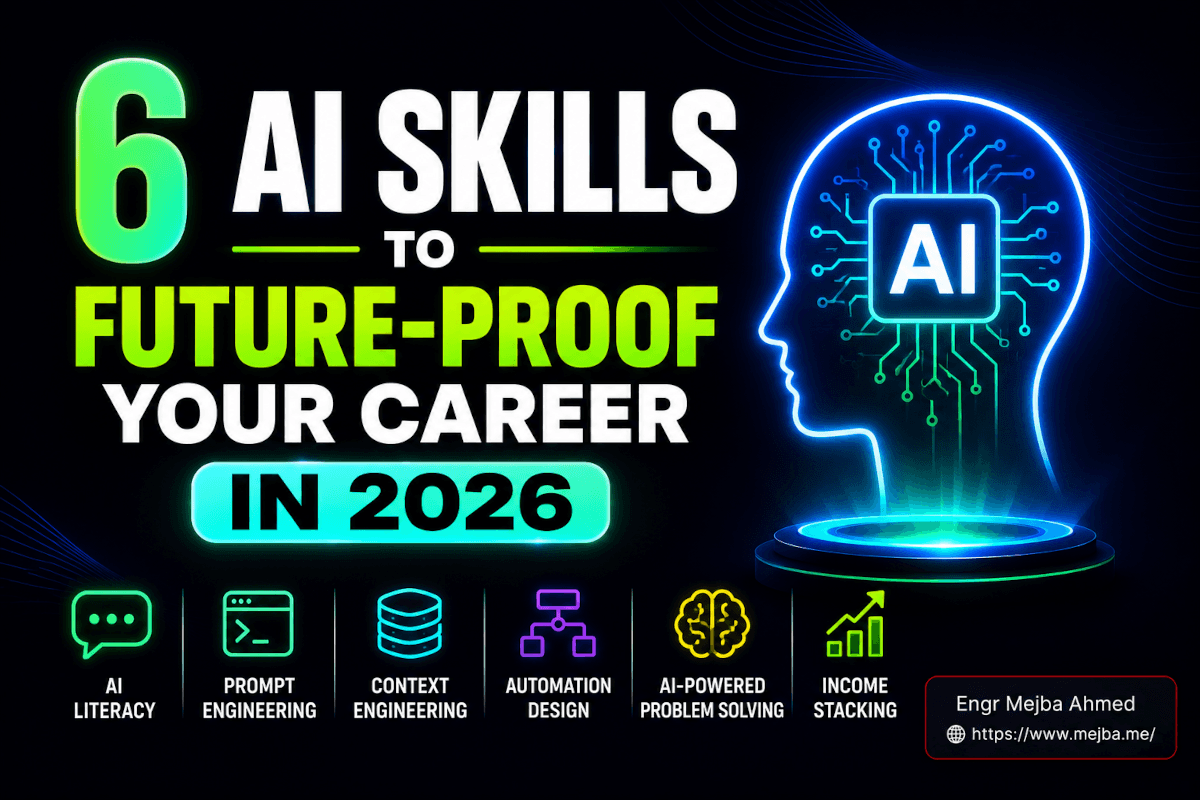
Dieser Moment ist der ganze Grund, warum ich das hier schreibe. Denn die KI-Fähigkeiten, um deine Karriere 2026 zukunftssicher zu machen, sind nicht die, die alle in Panik kaufen — es geht nicht um "lerne zu prompten" oder "mach einen ChatGPT-Kurs." Die echten Fähigkeiten sind leiser, eigenartiger und weitaus haltbarer. Es sind die, die das nächste Modell-Release überleben, statt davon überflüssig gemacht zu werden.
Ich bin ein arbeitender Ingenieur. Ich liefere Code aus, betreibe Automatisierungen, baue Content-Systeme und verdiene meinen Lebensunterhalt mit vier Marken, die alle jeden Tag auf KI setzen. Das hier ist also keine Prognose von jemandem, der die Welle vom Strand aus beobachtet. Es sind die sechs Verhaltensweisen, die ich tatsächlich entwickeln musste, um nützlich zu bleiben, während sich der Boden unter mir ständig bewegt. Keine davon erfordert, dass du deinen Job kündigst, von Grund auf programmieren lernst oder Gründer wirst. Sie erfordern, dass du veränderst, wie du innerhalb der Rolle arbeitest, die du bereits hast.
Lass mich zeigen, was ich meine.
Warum "lern einfach KI" furchtbarer Karriererat ist
Hier ist der unbequeme Hintergrund. Im Mai 2026 veröffentlichte IBM seine jährliche CEO-Studie — 2.000 Vorstandschefs weltweit befragt zusammen mit Oxford Economics. Die Schlagzeile: 85 % der Befragten sagen, dass alle funktionalen Führungskräfte zu Technologieexperten in ihrem eigenen Bereich werden müssen. Nicht die IT-Abteilung. Alle. Die Marketingleitung, die Finanzleitung, die operative Führung — alle, von denen erwartet wird, dass sie technisch fließend darin sind, wie KI ihren Bereich des Unternehmens antreibt.
Diese einzige Statistik rahmt das ganze Gespräch neu. Die Bedrohung für deine Karriere ist nicht, dass "KI dich ersetzen wird." Es ist subtiler: KI-Kompetenz wird zur Mindesterwartung, um im Raum bleiben zu dürfen. Die Menschen, die unter Druck geraten, sind nicht die, die nicht programmieren können — es sind die, die nicht nachweisen können, dass sie KI für die spezifische Sache zum Laufen gebracht haben, für die sie verantwortlich sind.
Und das sind eigentlich gute Nachrichten, denn "werde ein Technologieexperte in deinem Bereich" ist ein viel kleineres, erreichbareres Ziel als "werde KI-Ingenieur." Du musst die Transformer-Architektur nicht verstehen. Du brauchst sechs praktische Fähigkeiten, die sich aufschichten.
Die meisten Ratschläge hören bei "lerne ChatGPT zu benutzen" auf. Das ist, als würde man jemandem 1998 sagen "lerne E-Mail zu benutzen." Technisch korrekt, völlig unzureichend und stumm über den Teil, der tatsächlich zählt — Urteilsvermögen darüber, was du mit dem Ding tust, sobald du es bedienen kannst.
Die sechs Fähigkeiten unten sind grob geordnet von am-einfachsten-zu-beginnen bis zum-größten-Hebel. Die erste kannst du diese Woche starten. Die letzte braucht vielleicht ein Jahr. Hier ist der Haken, den niemand erwähnt: Die frühen Fähigkeiten machen die späteren erst möglich. Überspring die Grundlage und die Jarvis-Automatisierungen brechen zusammen. Also bauen wir der Reihe nach auf.
Fähigkeit 1: Werde die KI-Person (es ist relativ, nicht absolut)
Die schnellste Karriereversicherung, die ich kenne, wird auch am meisten übersehen, weil sie zu einfach klingt, um relevant zu sein: Sei die Person in deinem Umfeld, die am meisten über KI weiß.
Achte auf die Formulierung. Nicht "der Weltexperte." Die Person in deinem Umfeld. Diese Fähigkeit ist relativ, und genau deshalb ist sie erreichbar. Du musst nicht die Forscher bei Anthropic schlagen. Du musst merklich mehr wissen als die Kollegen, die neben dir sitzen — und die meisten von ihnen versuchen es gar nicht. Die Latte liegt niedriger, als dein Impostor-Syndrom glaubt.
Als ich damit anfing, habe ich nicht versucht, jedes Tool zu lernen. Ich wählte eines — Claude — und ging beschämend tief darauf ein. Ich lernte seine Macken, wo es versagt, welche Prompt-Muster es zuverlässig machen, wie man es an echte Arbeit koppelt statt an ein Chat-Fenster. Ein Tool in der Tiefe zu verstehen lehrte mich übertragbare Instinkte, die jedes andere Tool schneller aufnehmen ließen. Breite ist anfangs eine Falle. Tiefe gibt dir ein mentales Modell, das du portieren kannst.
Dann tat ich den Teil, der tatsächlich Karrieren bewegt: Ich automatisierte eine wiederkehrende Aufgabe in meiner eigenen Arbeit und zeigte die gesparte Zeit. Keine Demo. Ein echtes Vorher-Nachher, in einem Prozess, der meinem Team bereits wichtig war. In dem Moment, in dem du sagen kannst "dieser Bericht hat mich drei Stunden gekostet, jetzt dauert er zwanzig Minuten, hier ist die Ausgabe Seite an Seite," hörst du auf, eine Person mit einer Meinung über KI zu sein, und wirst eine Person mit einem Ergebnis.
Das ist der ganze Zug. Wähle ein Tool. Geh tief. Wende es auf etwas Echtes in deinem aktuellen Job an. Demonstriere den ROI in der Sprache, die dein Chef bereits verwendet — Stunden, Fehler, Durchlaufzeit, Umsatz. Plötzlich wirst du gebeten, die KI-Initiative zu leiten, die sonst niemand stemmen kann. Kein Jobwechsel nötig. Die Chance kommt zu dir, weil du dich zur offensichtlichen Antwort auf eine Frage gemacht hast, die deine Organisation bereits stellt.
Jetzt wird es interessant. "Die KI-Person" zu werden ist gefährlich, wenn du die nächste Fähigkeit überspringst — denn der schnellste Weg, diesen Ruf zu verlieren, ist selbstbewusst etwas auszuliefern, bei dem die KI daneben lag. Was uns zu der bringt, die mich fast einen Kunden gekostet hat.
Fähigkeit 2: Geschmack und Urteilsvermögen — dein neuer Wettbewerbsvorteil
Erinnerst du dich an das Angebot, das ich fast abgeschickt habe? Das ist diese Fähigkeit, oder genauer der Moment, als ich lernte, dass ich sie brauche.
Je besser KI-Output wird, desto seltsamer wird ein neues Risiko: Selbstzufriedenheit. Die Ausgabe sieht so poliert aus, dass du aufhörst, sie zu prüfen. Du fängst an, Geläufigkeit als Stellvertreter für Korrektheit zu vertrauen — und das sind nicht dasselbe. Ein Modell kann wunderschön, wortgewandt falsch liegen. Je besser die Prosa, desto gefährlicher der Fehler, weil er an deinen Abwehrmechanismen vorbeigleitet.
Geschmack ist die Fähigkeit, auf KI-Output zu schauen und schnell zu wissen, ob er wirklich deinen Namen verdient. Nicht ob er grammatikalisch ist. Ob er richtig, spezifisch und gut ist. Das wird die seltenste und wertvollste Fähigkeit im gesamten KI-Stack, genau weil die Modelle alles darunter übernehmen.
Hier ist, was die meisten Leute falsch machen: Geschmack ist nicht angeboren und nicht vage. Du baust ihn genauso auf, wie ein Sommelier seinen Gaumen bildet — durch bewusste Auseinandersetzung mit exzellenter Arbeit. Also fing ich an, eine Bibliothek anzulegen. Wenn ich ein Angebot las, das einen Deal abschloss, eine Landingpage, die konvertierte, ein Stück Code, das wirklich elegant war, speicherte ich es. Ich studierte, warum es funktionierte. Mit der Zeit wurde diese Bibliothek ein Kalibrierungsinstrument. Wenn mir die KI jetzt etwas überreicht, vergleiche ich es mit echten Beispielen von Exzellenz, nicht mit meinem Bauchgefühl.
Es gibt auch eine taktische Ebene. Lerne die Erkennungsmerkmale. KI-Texte haben stilistische Fingerabdrücke — den reflexartigen Gedankenstrich, den "es ist nicht nur X, es ist Y"-Rhythmus, den unerbittlichen Dreiklang, die nichtssagenden Einleitungen. Wenn dein Output diese Fingerabdrücke unbearbeitet trägt, erkennen Leser ihn als maschinell erzeugt, und Vertrauen sinkt leise. Ich lasse alles durch einen letzten Durchgang laufen, speziell um den KI-Akzent zu entfernen. (Ich habe eine vollständige Analyse der Prompt-Regeln, die meine KI vom Raten abhielten geschrieben — das ist die Input-Seite; Geschmack ist die Output-Seite. Du brauchst beides.)
Entwickle ein feines Gespür dafür, was wirklich deinen Namen verdient. Studiere Exzellenz in deinem spezifischen Bereich. Baue eine Referenzbibliothek auf. Gib der KI Feedback und beobachte, wie sie reagiert. Denn in einer Welt, in der alle die gleichen Modelle haben, ist dein Urteil darüber, was tatsächlich gut ist, das, was niemand kopieren kann. Das Modell ist austauschbar. Dein Geschmack nicht.
Gut von schlecht unterscheiden zu können ist die halbe Miete. Die andere Hälfte ist, die KI dazu zu bringen, von Anfang an guten Output zu produzieren — und das ist eine Fähigkeit, die fast alle verkehrt herum angehen.
Fähigkeit 3: Context Engineering schlägt Prompt Engineering
Die ganze Branche war zwei Jahre lang von Prompt Engineering besessen — der Kunst, die perfekte Frage zu formulieren. Das war wichtig, als Modelle dumm waren. Es ist jetzt weit weniger wichtig. Das Gespräch 2026 hat sich verschoben, und wenn du immer noch Formulierungen optimierst, während du den Kontext ignorierst, stimmst du das Radio, während der Motor fehlt.
Hier ist die Unterscheidung, die veränderte, wie ich arbeite:
- Prompt Engineering ist das Formulieren der Anfrage — der Anweisung, die du ins Feld tippst.
- Context Engineering ist das Füttern des Modells mit reichhaltigen, spezifischen Informationen über dein Unternehmen, deine Rolle, deine Projekte und deine Standards, bevor es die Anfrage je sieht.
Ein leeres Chatfenster gibt dir generischen Output, weil du generischen Input gegeben hast. Dasselbe Modell, geladen mit deinem tatsächlichen Kontext, gibt dir Output, der klingt, als käme er von jemandem, der in deinem Unternehmen arbeitet — weil das funktional jetzt so ist.
Das mentale Modell, bei dem es bei mir klick machte: Behandle die KI wie einen neuen Praktikanten, nicht wie eine Suchmaschine. Ein kluger Praktikant am ersten Tag weiß nichts über dein Unternehmen. Du würdest ihm keine einzeilige Aufgabe geben und Brillanz erwarten. Du würdest ein Briefing geben — hier ist der Kunde, hier ist unsere Stimme, hier ist, was wir vorher probiert haben, hier bedeutet "gut" dies. Context Engineering ist dieses Briefing, dauerhaft und wiederverwendbar gemacht.
In der Praxis bedeutet das, dass ich fast nie mehr aus leeren Chats heraus arbeite. Ich baue dedizierte KI-Projekte — custom GPTs, Claude Projects, konfigurierte Arbeitsbereiche — jedes geladen mit echten Dokumenten: Markenrichtlinien, frühere erfolgreiche Arbeiten, technische Spezifikationen, die tatsächlichen Daten. Wenn ich etwas für eine Marke brauche, erkläre ich die Marke nicht jedes Mal. Der Kontext ist bereits da. Der Output beginnt auf einem Niveau, das ein leeres Chatfenster nach zehn Runden Prompten nicht erreichen könnte.
Das ist keine Randmeinung mehr. Laut dem 2026 State of Context Management Report sagen 82 % der IT- und Datenverantwortlichen jetzt, dass Prompt Engineering allein nicht mehr ausreicht, um KI im großen Maßstab zu betreiben, und 95 % der Datenteams planen, dieses Jahr in Context-Engineering-Training zu investieren. Der Markt hat aufgeholt, was Praktiker bereits wussten: Der Prompt ist das Lenkrad, aber Kontext ist der Treibstoff. Ich bin tiefer auf genau diese Verschiebung eingegangen in warum KI-Agent-Kontext Konfiguration schlägt — wenn du Agenten baust, lohnt sich das.
Also hör auf, Prompts zu polieren. Fang an, Kontextumgebungen zu bauen. Lade sie mit deinen echten Daten und verwende sie wieder. Es ist der Unterschied zwischen KI, die wie alle klingt, und KI, die wie du klingt.
Jetzt hast du Kontext, der guten Output produziert, und Geschmack, um ihn zu beurteilen. Die nächste Fähigkeit dreht sich darum, wie schnell du diese Schleife drehen kannst — denn Geschwindigkeit, wie sich herausstellt, schlägt Perfektion fast immer.
Fähigkeit 4: Iterationsgeschwindigkeit — das Fahrrad-Prinzip
Wenn ich den größten einzelnen Verhaltensunterschied zwischen Menschen, die Wert aus KI ziehen, und Menschen, die es nicht tun, benennen müsste, wäre es dieser: Die Gewinner iterieren schnell und die Verlierer warten, bis es perfekt ist.
Denk daran, wie du Fahrradfahren gelernt hast. Niemand gab dir ein Lehrbuch über Gleichgewicht und gyroskopische Präzession. Du stiegst auf, wackeltest, korrigiertest, fielst, pastest an, und nach genug schnellen kleinen Feedback-Zyklen klickte es. Du hast die Theorie nicht zuerst perfektioniert. Du hast durch schnelle Schleifen kalibriert.
Mit KI zu arbeiten ist identisch. Das Modell ist eine Feedback-Maschine. Sein ganzer Wert ist, dass du prototypen, das Ergebnis sehen, korrigieren und in Sekunden erneut starten kannst — eine Schleife, die früher Tage dauerte. Leute, die KI wie einen Automaten behandeln (perfekten Prompt einstecken, perfekte Antwort erhalten), sind frustriert, wenn die erste Ausgabe enttäuscht. Leute, die es wie einen Sparring-Partner behandeln — schneller Jab, schauen was zurückkommt, anpassen — kommen schneller zu einem großartigen Ergebnis, als die Perfektionisten zu ihrem ersten Entwurf.
Ein paar konkrete Gewohnheiten, die ich aufgebaut habe, um die Iterationsgeschwindigkeit zu erhöhen:
- Beherrsche deine Tastatur und Spracheingabe. Das klingt trivial. Ist es nicht. Ich fügte Sprachdiktat zu meinem Workflow hinzu und meine Prototyping-Geschwindigkeit verdoppelte sich ungefähr, weil ein halbfertiges Idee auszusprechen schneller ist als ein poliertes zu tippen. Reibung im Input ist Reibung in der Schleife. Eliminiere sie.
- Prototyp hässlich, dann verfeinere. Komm schnell zu einer groben Version. Ein schlechter Entwurf, auf den du reagieren kannst, ist mehr wert als ein perfekter Plan, den du dir noch vorstellst. Die KI ist am besten als etwas, worauf du reagierst, nicht als etwas, das du fehlerfrei briefst.
- Definiere "fertig" bevor du anfängst — und binde es an eine echte Metrik. Das ist der Teil, den alle überspringen, und wo Iteration stirbt. Ohne eine klare Ziellinie iterierst du ewig, polierst etwas, das vor drei Runden schon gut genug war. Also setze ich vorab ein konkretes Ziel: "Diese E-Mail muss Antworten auslösen," "dieses Skript muss fehlerfrei auf der Testdatei laufen," "dieser Entwurf muss meine Geschmacksbibliothek bestehen." Wenn die Metrik erreicht ist, höre ich auf. Schnelle Iteration ohne Stoppbedingung ist keine Geschwindigkeit — es ist ein Hamsterrad.
Dieser dritte Punkt ist die Leitplanke. Iterationsgeschwindigkeit ohne Definition von fertig wird Scope Creep mit extra Schritten. Die Fähigkeit ist nicht nur schnell zu sein. Es ist schnell auf eine Linie zuzulaufen, die du absichtlich gezogen hast.
An diesem Punkt kannst du ein Tool wählen, Output beurteilen, Kontext einspeisen und schnell iterieren. Du operierst bereits vor den meisten Leuten in deinem Feld. Aber alles bisher erfordert noch dich in der Schleife, wie du auf Start drückst. Die nächste Fähigkeit ist, wo du die Schleife ganz verlässt.
Fähigkeit 5: Bau deinen eigenen Jarvis (und wisse, wann nicht)
Der echte Hebel zeigt sich, wenn KI arbeitet, während du schläfst.
Ich spreche von Always-on-Automatisierungen — Systeme, die auf vorhersehbare Ereignisse triggern und laufen, ohne dass du sie anfasst. Eine E-Mail kommt rein und wird kategorisiert, entworfen und in die Warteschlange gestellt. Eine Formulareinreichung startet eine Rechercheaufgabe und legt ein Briefing in deinen Posteingang. Ein wöchentlicher Trigger zieht Daten, fasst sie zusammen und postet das Ergebnis. Dein eigener Jarvis, der leise die repetitiven Dinge erledigt, damit deine Aufmerksamkeit der Arbeit gehört, die nur du tun kannst.
Aber hier ist die Erkenntnis, die Menschen, die zuverlässige Automatisierungen bauen, von denen unterscheidet, die teure, fragile bauen — und ich habe das auf die harte Tour gelernt, nachdem ich etwas overengineert hatte, das einen Nachmittag hätte dauern sollen. Du musst wissen, wann eine Aufgabe KI-Reasoning braucht versus wann sie einfach einen deterministischen Workflow braucht.
Ich denke dabei an Spielautomat versus Snackautomat:
- Ein Spielautomat gibt bei jedem Zug variable Ausgabe. Das ist ein KI-Agent — du willst ihn, wenn die Aufgabe open-ended ist, wenn der Weg weniger zählt als eine gute Antwort auf ein unscharfes Problem zu finden. Reasoning erforderlich.
- Ein Snackautomat gibt jedes Mal dieselbe vorhersehbare Ausgabe, wenn du B4 drückst. Das ist ein deterministischer Workflow — wenn die Schritte bekannt und festgelegt sind, willst du kein probabilistisches Modell, das improvisiert. Du willst die langweilige, zuverlässige Maschine, die jedes Mal exakt dasselbe tut.
Der Fehler — und ich habe ihn gemacht — ist nach einem schicken KI-Agent zu greifen, wenn ein simpler Wenn-das-dann-das-Workflow die Aufgabe günstiger, schneller und zuverlässiger erledigen würde. Agenten sind verführerisch. Sie fühlen sich mächtig an. Aber sie sind probabilistisch, und probabilistische Dinge versagen auf Arten, die deterministische nicht tun.
Die Zuverlässigkeitsrechnung hier ist brutal und wert, verinnerlicht zu werden. Wenn ein einzelner KI-Schritt 90 % zuverlässig ist und du drei verkettst, sinkt deine End-to-End-Zuverlässigkeit auf etwa 73 %. Verkette fünf und du bist auf Münzwurf-Niveau. Jeder Agent, den du einem Workflow hinzufügst, multipliziert die Fehlerwahrscheinlichkeit. Deshalb ist die Best Practice 2026 in ernst zu nehmenden Engineering-Teams hybrid: deterministische Grenzen, wo du Zuverlässigkeit brauchst, KI-Autonomie nur dort, wo du wirklich Flexibilität brauchst. Nutze Agenten, um den Workflow zu entwerfen, dann betreibe den Workflow deterministisch in Produktion.
Meine Regel beim Bauen jeder Automatisierung:
- Überprüfe zuerst deine repetitiven Aufgaben. Verbringe eine Woche damit, jede Aufgabe zu bemerken, die du mehr als dreimal erledigst. Diese Liste ist dein Automatisierungs-Backlog, sortiert nach Nervfaktor.
- Standardmäßig zum einfachsten Tool, das funktioniert. Das meiste, was sich anfühlt, als bräuchte es KI, braucht eigentlich einen normalen Workflow. Reserviere Agenten für die wirklich unscharfen, reasoning-lastigen Teile.
- Priorisiere Zuverlässigkeit über Cleverness. Eine langweilige Automatisierung, die 99 % der Zeit korrekt läuft, schlägt einen brillanten Agent, der dich 1 von 5 Mal überrascht. Cleverness kann man demonstrieren. Auf Zuverlässigkeit kann man bauen.
Wenn du einen tieferen Blick auf diese Abwägung in echten Systemen willst, habe ich die KI-Automatisierungen, für die Unternehmen tatsächlich zahlen aufgeschlüsselt — und beachte, wie viele der hochwertigsten schlicht und einfach sind, keine aufwendigen Agent-Schwärme. Das Geld steckt in zuverlässig und langweilig, nicht in auffällig und fragil.
Bau deinen Jarvis. Aber bau ihn wie ein Ingenieur, der gelernt hat, nicht wie ein Hobbyist, der der coolsten Demo nachjagt. Nutze das einfachste effektive Tool. Dein zukünftiges Ich, das um 2 Uhr nachts debuggt, wird dir danken.
Jetzt — fünf Fähigkeiten drin, du hast dich wertvoll, scharf, schnell und teilweise automatisiert gemacht. Es gibt noch eine, und sie ist die, die Karriere-Verteidigung in Karriere-Antifragilität verwandelt.
Fähigkeit 6: Arbeitslosenversicherung durch Job Stacking
Alles oben schützt deine Position innerhalb eines Jobs. Diese letzte Fähigkeit schützt dich davor, dass der Job selbst verschwindet.
Ich nenne es Arbeitslosenversicherung, aber der sauberere Begriff ist Job Stacking — bewusst mehrere KI-betriebene Einkommensströme innerhalb deines eigenen Bereichs und deiner Leidenschaft aufbauen, sodass kein einzelner Arbeitgeber dein gesamtes finanzielles Leben in der Hand hält. Nicht als Hustle-Culture-Flex. Als strukturelle Risikominderung, so wie du Investitionen diversifizieren würdest, statt alles in eine Aktie zu stecken.
Ich lebe das. Das Marken-Ökosystem, das ich betreibe — die persönliche Seite, die Agentur, das Designstudio, die Sicherheitspraxis — existiert teilweise, weil KI es einer Person ermöglicht hat, mehrere aufeinander abgestimmte Einkommensströme gleichzeitig zu pflegen. KI hat meine Arbeit nicht ersetzt; sie ließ mich mehr davon parallel betreiben, als ich je von Hand hätte schaffen können. Das ist der Zug, auf eine Person skaliert: Nutze den KI-Hebel, um deine bestehende Expertise in mehr als einen Strom umzuwandeln.
Die Daten zeigen, dass ich mit diesem Gefühl nicht allein bin. Eine Umfrage 2026 ergab, dass 67 % der Gen Z Einkommensstapelung jetzt als essenziell für finanzielle Sicherheit betrachten, und 83 % der Creator sagen, sie wollen mehrere Einkommensströme statt eines Kanals. Das Ein-Gehalt-Modell — das, was unsere Eltern als Definition von Stabilität behandelten — liest sich zunehmend als Konzentrationsrisiko. Eine Entlassung, eine Umstrukturierung, ein schlechtes Quartal, und ein Single-Stream-Einkommen geht über Nacht auf Null.
So würde ich tatsächlich anfangen, denn "bau Einkommensströme auf" ist nutzloser Rat ohne einen Weg:
- Richte es an deiner Leidenschaft und Expertise aus, nicht an einem Trend. Das Nebenprojekt, das überlebt, ist das, das du sowieso machen würdest. Burnout ist der eigentliche Ausfallmodus von Job Stacking, und das Heilmittel ist echtes Interesse. Staple Dinge, die du magst, in Bereichen, die du bereits kennst, wo KI dich mehr produzieren lässt, als deine Stunden allein erlauben würden.
- Bau etwas Kleines und Echtes, mit KI als deinem Team. Digitale Produkte, die mit KI gebaut wurden — Templates, Toolkits, Frameworks, ein kleines Tool — können einmal erstellt und vielfach verkauft werden bei nahezu null Fulfillment-Kosten. Das ist der margenreichste Strom, der den meisten Menschen zur Verfügung steht, und KI hat gerade die Baukosten auf fast nichts gesenkt.
- Teile deine Arbeit öffentlich. Das ist jetzt nicht verhandelbar und wird immer wichtiger. Da KI-gesteuerte Suchoberflächen zur Art werden, wie Menschen alles finden, ist die Arbeit, die du veröffentlicht hast, das, was auftaucht. Sichtbarkeit zieht Chancen an — Kunden, Mitstreiter, den nächsten Strom. Die Person, die öffentlich und konsequent geliefert hat, wird gefunden. Die Person, die großartige private Arbeit geleistet hat, nicht.
- Respektiere die Richtlinien deines Unternehmens. Lies deinen Arbeitsvertrag. Respektiere Datennutzungsregeln, Automatisierungsrichtlinien und Nebentätigkeitsklauseln. Job Stacking richtig gemacht ist additiv und transparent, nichts, das du versteckst. Baue Ströme, die deinen Hauptjob ergänzen, und bleib sauber — das Ziel ist Resilienz, nicht ein Rechtsstreit.
Arbeitslosenversicherung heißt nicht kündigen. Die meisten, die sie aufbauen, verlassen nie ihren Hauptjob — sie schlafen nur besser, verhandeln härter und gehen klügere Risiken ein, weil ihr ganzes Leben nicht mehr an der Meinung einer einzigen Führungskraft hängt. Diese Sicherheit verändert, wie du bei der Arbeit auftrittst, meistens zum Besseren.
Was tatsächlich passiert, wenn du diese Fähigkeiten aufbaust
Lass mich ehrlich über den Zeitrahmen sein, denn ich habe zu viele "KI verzehnfacht dich über Nacht"-Posts gesehen und die sind Müll.
Diese Fähigkeiten schichten sich langsam auf, dann plötzlich. Die erste — die KI-Person werden — kannst du diese Woche beginnen und innerhalb eines Monats Traktion sehen, weil die Latte um dich herum wirklich niedrig liegt. Geschmack dauert länger; erwarte einige Monate bewussten Studiums, bevor dein Urteil scharf genug ist, um unter Druck zu vertrauen. Context Engineering zahlt sich aus, sobald du deine erste echte Projektumgebung baust und nie zurückschaust. Iterationsgeschwindigkeit verbessert sich an dem Tag, an dem du deine Input-Reibung behebst. Jarvis-Automatisierungen brauchen je ein Wochenende zum Bauen und ein Leben lang, um sie zuverlässig zu halten. Job Stacking ist der langsame — realistisch ein Jahr, bevor ein zweiter Strom bedeutsam ist.
Was ich dir aus meiner Erfahrung sagen kann: Der Ingenieur, der alle sechs hat, sorgt sich nicht ums Ersetztwerden, denn er ist die Person geworden, die entscheidet, wie KI eingesetzt wird, statt die Person, anstelle derer KI eingesetzt wird. Das ist das ganze Spiel. Du konkurrierst nicht mit dem Modell. Du positionierst dich eine Ebene darüber — es steuern, beurteilen, kontextualisieren und die Ergebnisse verantworten.
Die IBM-Zahl vom Anfang dieses Stücks — 85 % der CEOs sagen, jede Führungskraft muss Technologieexperte in ihrem Bereich werden — ist keine Bedrohung, sobald du diese Fähigkeiten aufgebaut hast. Es ist eine Beschreibung der Rolle, in die du bereits hineingewachsen bist.
Das Eine, das du in den nächsten 24 Stunden tun solltest
Versuch nicht, alle sechs diese Woche aufzubauen. Das ist ein Rezept, keine davon zu schaffen.
Wähle Fähigkeit eins. Wähle ein einzelnes KI-Tool — Claude, oder was du am meisten nutzt — und finde eine wiederkehrende Aufgabe in deinem tatsächlichen Job, die deine Zeit frisst. Automatisiere sie, auch grob. Miss das Vorher und Nachher. Dann erzähle genau einer Person bei der Arbeit, was du getan hast und was es gespart hat.
Das war's. Das ist der ganze erste Zug. Denn hier ist, was ich gelernt habe, als ich das beobachtete: Die Menschen, die ihre Karriere zukunftssicher machen, sind nicht die, die am meisten über KI lesen. Es sind die, die eine kleine echte Sache gebaut haben, sie funktionieren sahen und hungrig auf die nächste wurden. Das Lesen ist einfach. Das Bauen ist die Fähigkeit.
Also welche Aufgabe automatisierst du heute Abend — und wem wirst du es zeigen?
Häufig gestellte Fragen
Welche KI-Fähigkeiten sind am wichtigsten, um deine Karriere 2026 zukunftssicher zu machen?
Die haltbarsten KI-Fähigkeiten basieren auf Urteilsvermögen, nicht auf Tools: der relative KI-Experte in deinem Umfeld werden, Geschmack entwickeln, um KI-Output zu bewerten, Context Engineering, Iterationsgeschwindigkeit, zuverlässige Automatisierungen bauen und mehrere Einkommensströme stapeln. Diese überleben Modell-Updates, weil sie bestimmen, wie KI eingesetzt wird, statt mit ihr zu konkurrieren.
Muss ich Programmieren lernen, um meine Karriere gegen KI abzusichern?
Nein. Da 85 % der CEOs in IBMs 2026-Studie erwarten, dass jede funktionale Führungskraft zum Technologieexperten im eigenen Bereich wird, ist das Ziel domainspezifische KI-Kompetenz, nicht Software-Engineering. Du musst KI für das zum Laufen bringen, wofür du bereits verantwortlich bist — was ein viel kleineres, erreichbareres Ziel ist, als von Grund auf programmieren zu lernen.
Was ist Context Engineering und warum ist es wichtiger als Prompting?
Context Engineering ist das Füttern von KI mit reichhaltigen, spezifischen Informationen über dein Unternehmen, deine Rolle und deine Standards, bevor sie deine Anfrage sieht, statt nur den perfekten Prompt zu formulieren. Es ist wichtiger, weil die Realität 2026 zeigt, dass 82 % der Datenverantwortlichen sagen, Prompting allein kann KI nicht skalieren — Kontext macht den Output einzigartig statt generisch. Siehe den Abschnitt über Context Engineering oben für die vollständige Aufschlüsselung.
Wann sollte ich einen KI-Agent versus eine einfache Automatisierung verwenden?
Verwende einen deterministischen Workflow, wenn die Schritte festgelegt und vorhersehbar sind (der "Snackautomat"), und reserviere KI-Agenten für open-ended Aufgaben, die echtes Reasoning erfordern (der "Spielautomat"). Das Verketten mehrerer Agenten multipliziert Fehler — drei 90 %-zuverlässige Schritte fallen auf ~73 % End-to-End — also standardmäßig das einfachste zuverlässige Tool und Agenten nur für unscharfe Probleme reservieren.
Lass uns zusammenarbeiten
Du möchtest KI-Systeme bauen, Workflows automatisieren oder deine Tech-Infrastruktur skalieren? Ich helfe dir gern.
- Fiverr (Maßanfertigung & Integrationen): fiverr.com/s/EgxYmWD
- Portfolio: mejba.me
- Ramlit Limited (Enterprise-Lösungen): ramlit.com
- ColorPark (Design & Branding): colorpark.io
- xCyberSecurity (Sicherheitsdienste): xcybersecurity.io