There's been a lot of noise on X lately about something called "Claude Bot." I've watched the hype build, seen the demos, and noticed the confusion spreading through my feed. Half the developers I follow think it's just another name for Claude Code. The other half have no idea what it does but want in on the action.
Let me clear this up—because after digging into this, I realized Claude Bot represents something genuinely different. It's not what most people think it is, and understanding the distinction matters if you're considering running one yourself.
The Confusion That's Spreading Fast
Every week, I see at least a dozen posts conflating Claude Bot with Claude Code. They're not the same thing. Not even close. And this confusion is causing people to either dismiss Claude Bot entirely or dive in without understanding what they're actually deploying.
Here's the core distinction: Claude Code is Anthropic's official coding-focused AI assistant. You access it through their platform, it has guardrails, and it operates within defined boundaries. It's excellent for development tasks, code generation, and technical problem-solving within a controlled environment.
Claude Bot (sometimes spelled CLAWD Bot) is an entirely separate open-source application. It can use Claude's capabilities, but it's built by the community and operates on fundamentally different principles. The "bot" in the name isn't just branding—it describes what this thing actually does.
When I first encountered Claude Bot, I made the same mistake everyone else did. I assumed it was some kind of wrapper or extension for Claude Code. It took reading through the source code and watching several implementation videos to understand the actual architecture. This is a locally-installed agent that lives on your machine and communicates with you through messaging platforms.
What Claude Bot Actually Does
Picture this scenario: You install an application on your Mac Mini. That application connects to your Telegram or WhatsApp account. Now you can message it from your phone, and it responds by taking actions on your computer.
That's Claude Bot in its simplest form. But the implications run deeper than a simple remote control.
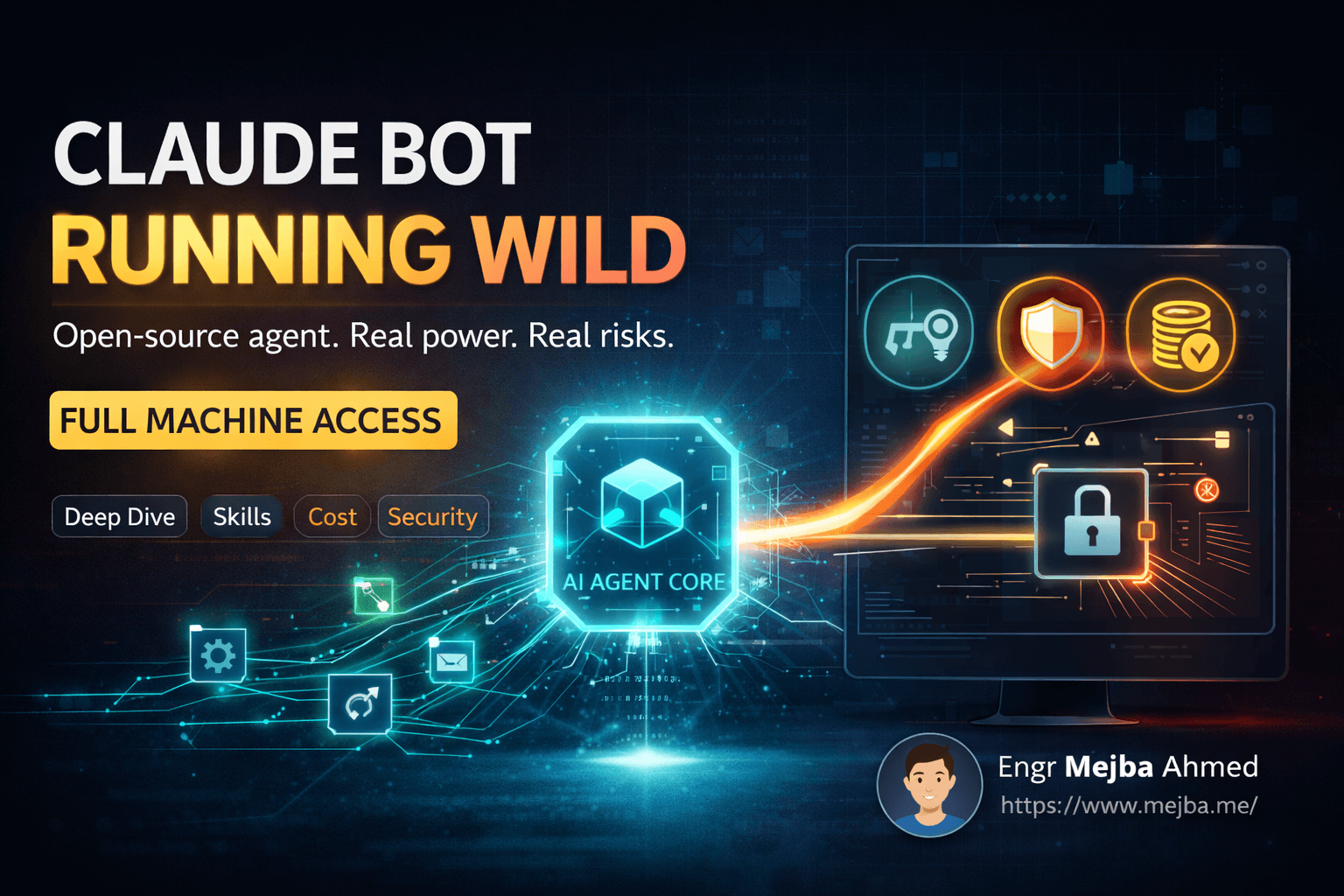
The agent runs with full permissions on whatever machine hosts it. This means Claude Bot can do anything you can do on that computer:
- Create, modify, and delete files
- Open browsers and navigate to websites
- Access your email
- Make reservations and bookings
- Monitor social media
- Execute arbitrary code
- Install software
- Interact with any service you're logged into
This isn't some sandboxed playground. When you give Claude Bot access, you're essentially giving an AI agent your digital keys.
The proactive nature sets it apart from every chatbot you've used before. Traditional AI assistants wait for you to ask questions. Claude Bot learns your patterns and acts without being prompted. If you've told it you care about cryptocurrency trends, it might send you a Telegram message at 2 AM because something significant happened in the market. If you've set up a research routine, it compiles reports and delivers them on schedule.
I've been building AI integrations for a while now, and this proactive behavior represents a meaningful shift. Most automation requires explicit triggers—cron jobs, webhooks, user commands. Claude Bot introduces something closer to genuine autonomy, where the system decides when to act based on learned context.
The Skills Ecosystem
One feature that caught my attention is the skills database. Think of skills as plugins, but with a community-driven twist.
The open-source community has been building skills that extend what Claude Bot can do. Each skill adds a new capability: monitoring specific websites, automating particular workflows, connecting to additional services. The repository keeps growing as more developers contribute.
This modular approach means Claude Bot isn't limited to what its creators imagined. Someone builds a skill for tracking package deliveries. Another developer creates one for managing calendar conflicts. A third contributes automated backup routines. Each skill plugs into the core system and becomes available to everyone.
I've seen similar patterns in other open-source projects, but the combination of community skills plus autonomous execution creates interesting possibilities. You're not just extending a tool—you're expanding what an AI agent can proactively do on your behalf.
The Technical Reality of Running Claude Bot
Let me be direct about what's required to actually run this thing.
You need to be comfortable with terminal commands. This isn't a one-click installer situation. The setup process involves:
- Cloning repositories
- Configuring environment variables
- Setting up API connections to Claude
- Connecting messaging platform integrations
- Managing permissions and security settings
- Troubleshooting inevitable configuration issues
If you've never used a command line interface, Claude Bot isn't where you want to start. The documentation assumes familiarity with basic development workflows. Even experienced developers report spending several hours on initial setup, dealing with dependency conflicts and platform-specific quirks.
The technical barrier exists for good reason. Claude Bot does powerful things. The complexity of setup acts as a natural filter, ensuring that people who deploy it understand (at least partially) what they're enabling.
I've set up similar local AI deployments before. The process feels familiar if you've worked with self-hosted applications. But if your experience stops at installing desktop apps, expect a learning curve.
Cost Considerations That Nobody Talks About
Here's where the conversation gets uncomfortable.
Claude Bot runs on Claude's API. Every action it takes, every thought it has, every analysis it performs—all of that consumes tokens. Tokens cost money. And an autonomous agent that runs continuously consumes a lot of tokens.
I've seen reports of daily costs reaching $200-500 for heavy users. Let that sink in. Running Claude Bot with extensive proactive monitoring could cost more per month than your rent.
The costs compound in ways that aren't obvious at first:
- Background processing: Even when you're not actively messaging it, Claude Bot might be thinking, analyzing, preparing
- Scheduled tasks: Each automated routine triggers API calls
- Skill execution: Complex skills require multiple model interactions
- Context retention: Remembering your preferences and history requires ongoing processing
There's no magic free tier here. Every capability has a price tag, and those tags add up faster than most people expect.
I've built systems with similar cost structures before. The key is understanding your usage patterns before committing. A Claude Bot that checks one social feed twice daily costs vastly less than one monitoring dozens of sources continuously. But the system makes it easy to add more—and easy to forget each addition costs money.
The Security Conversation We Need to Have
This is where I need to be especially clear, because I've seen too many enthusiastic posts glossing over these concerns.
Claude Bot runs with your permissions. It has no built-in guardrails restricting its actions. The AI driving it is non-deterministic and capable of hallucinations. Combine these factors, and you have a system that can potentially:
- Send messages to your contacts without explicit approval
- Make purchases or commitments on your behalf
- Access sensitive information and act on it in unexpected ways
- Execute commands that damage your system or data
- Share information you didn't intend to share
I'm not saying these things will happen. I'm saying they can happen, and the architecture doesn't prevent them.
The open-source nature means you can inspect the code and understand what's happening. That's a genuine advantage. But inspection requires expertise, and even reviewed code can produce surprising behaviors when paired with an unpredictable AI model.
In my cybersecurity work, I've seen how tools designed for legitimate purposes get misused. Claude Bot isn't malicious by design, but its power comes from unrestricted access. That same power creates risk surface area that users need to understand.
If you're running Claude Bot, consider:
- Using a dedicated machine, not your primary workstation
- Creating a separate user account with limited permissions
- Monitoring what the bot actually does, not just what you asked it to do
- Setting up alerts for unexpected actions
- Having a kill switch ready
These precautions might feel excessive until you wake up to discover your AI agent sent emails to everyone in your contact list at 3 AM because it "thought that would be helpful."
The Experimental Status
Claude Bot is not production-ready software. The developers say this directly. The community understands it. But the excitement on social media sometimes overshadows this reality.
"Experimental" means:
- Expect breaking changes with updates
- Documentation may be incomplete or outdated
- Some features won't work as described
- Edge cases haven't been fully explored
- Support comes from community, not professional staff
I appreciate experimental software. Some of my favorite tools started as rough prototypes. But using experimental software for anything important requires accepting that things will break and you'll need to fix them yourself.
Claude Bot represents cutting-edge exploration of what AI agents can do. That exploration involves failure, unexpected behavior, and continuous iteration. If you're comfortable being a pioneer—complete with the hardships pioneers face—it might be worth exploring. If you need reliability, wait for maturity.
Why the Buzz Matters
Despite the risks and costs and complexity, Claude Bot is generating genuine excitement for valid reasons.
The AI agent paradigm it represents points toward a future where AI doesn't just respond to queries—it anticipates needs and takes action. That's a fundamentally different relationship between humans and AI systems.
Right now, I interact with AI by asking questions and receiving answers. Sometimes I give it tasks and check the results. Claude Bot suggests a world where AI operates more like a capable assistant who works in the background, handling things before I even think to ask.
The community aspect also deserves attention. Open-source AI agents, built and improved by developers worldwide, represent a different trajectory than corporate-controlled AI services. Whether that's better or worse depends on your perspective, but it's undeniably different.
I've been watching AI development closely for years. The shift from AI-as-tool to AI-as-agent feels significant. Claude Bot is an early, imperfect implementation of that shift. Its limitations don't diminish the importance of what it's attempting.
Practical Next Steps If You're Interested
If you're still intrigued after everything I've outlined, here's how I'd suggest approaching Claude Bot:
Start with research, not installation. Read through the source code. Watch demo videos. Understand what you're deploying before you deploy it. The GitHub repository and community discussions contain valuable information about both capabilities and pitfalls.
Set up a test environment. Don't run Claude Bot on your primary machine initially. Use a secondary computer, a virtual machine, or a cloud instance. Contain the experiment until you understand the behavior.
Budget explicitly. Decide how much you're willing to spend exploring this. Set hard API limits. Track your costs from day one. The learning curve has a price tag, and you should know what you're paying.
Start simple. Don't enable every skill and feature immediately. Begin with basic interactions, add capabilities incrementally, and observe how each addition affects behavior and cost.
Connect with the community. The developers and early adopters have accumulated knowledge that isn't fully documented. Discord servers, forums, and X threads contain practical wisdom from people who've already encountered the problems you'll face.
The Broader Context
Claude Bot exists within a rapidly evolving landscape of AI agents. It's not the only project exploring this space, and it won't be the last. The concepts it implements—local execution, messaging integration, proactive behavior, community skills—will appear in various forms across the AI ecosystem.
Understanding Claude Bot helps you understand where AI development is heading. Even if you never run it yourself, knowing what's possible informs how you think about AI integration in your own projects.
I'll be watching how this evolves. The current state is rough but promising. The community is active and growing. The capabilities expand weekly. Whether Claude Bot specifically succeeds or gets superseded by something better, the paradigm it represents seems likely to persist.
For now, it remains an exciting experiment with real potential and real risks. Approach accordingly.
Whether to Run Claude Bot Yourself
The Claude Bot open source agent is worth running if you accept the babysitting — autonomy is a spectrum, and this one still needs a leash. My my Claudebot deep dive and agent security risks go deeper.
If you want an open-source agent deployed safely, that's work I take on through Ramlit.