I killed a product last Tuesday.
Not a bad product. A working one. A Laravel app I'd shipped in March with a clean auth flow, a Stripe integration, a dashboard my first three users actually logged into. I killed it because I realized — sitting at my desk at 11:47 PM, staring at a feature roadmap I'd built like it was still 2023 — that I was bolting AI onto something that should have been designed around AI from the first line of code.
That's the red ocean. That's where most of us are still swimming without knowing it.
The blue ocean is something else entirely, and it's the thing I've been quietly circling for about six months now. An AI-first company in 2026 doesn't have "an AI feature." It doesn't have a chatbot pinned to the bottom-right corner. It has no traditional UI at all in some cases — no forms, no dashboards, no "create new project" buttons. It has an agent that does the thing, a phone number that calls the candidate, a voice that reads the email back to you while you drive. The app paradigm is dissolving. And if you're building the way you built two years ago, you're building yesterday's software with tomorrow's tools stapled to it.
I've been thinking about this in the context of Dan Martell's venture studio — Martell Ventures — which has become the most-cited case study for what an AI-first company 2026 actually looks like operationally. Martell's team is targeting $25B in enterprise value in three years, running 15+ AI-first companies with roughly a 15-person ops team. That's not a typo. One ops team. Multiple companies. Martell also just launched APEX in late March, a self-hosted AI operating layer for founders that plugs into Slack, email, and WhatsApp. The studio model works for him because he has 350+ playbooks, decades of founder capital, and a network most of us will never have.
So the question I've been turning over is this: what actually transfers to a solo operator or a four-person team? What's signal, what's theater, and where does the doer-to-director shift actually break in real life?
This is my honest read. I've been running my own version of this experiment across my brands for almost a year. Some of it worked. Some of it quietly embarrassed me. I'll tell you both parts.
The Red Ocean You're Probably Swimming In Right Now
Let's define the thing properly, because "AI-first" has become one of those phrases that everyone nods at and nobody pressure-tests.
AI-added is what 95% of SaaS companies are doing right now. You have a product. The product works. You add an AI feature — summarization, autocomplete, a "chat with your data" sidebar. The core workflow is unchanged. A user still logs in, clicks buttons, fills forms, exports CSVs. The AI is a paint job on a building that was designed for human hands.
AI-first inverts the entire stack. The workflow is the agent. The interface is whatever medium the user is already in — voice, SMS, email, a Slack thread. The "product" is a set of outcomes the system produces, not a set of screens the user navigates.
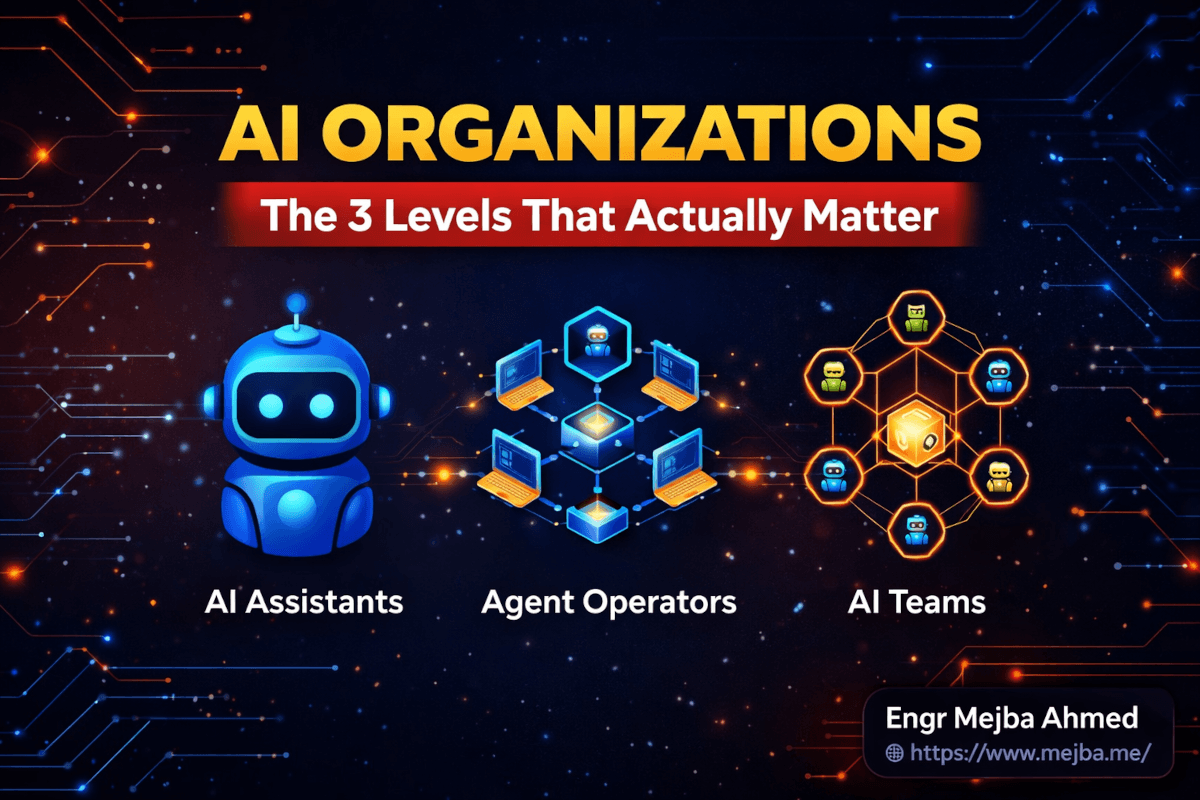
A recruiting company called Hero is the example I keep coming back to. No traditional UI. You tell it what role you're hiring for. It writes the job post. It sources candidates. It texts them. It calls them. It pre-screens them. A human gets involved at the decision layer — not the data-entry layer. According to recent analysis in MIT Sloan Management Review, companies that have genuinely reorganized around AI are hitting 2-3x faster product iteration cycles than digital-first peers who are still in the "add an AI feature" mode. That gap is compounding monthly.
Here's the test I run on my own products now. Ask yourself this one question: If I removed the AI component tomorrow, would the product still function?
If the answer is "yes, it just becomes less useful" — you're AI-added. Your product is a building with a smart thermostat.
If the answer is "no, there is literally no product without it" — you're AI-first. The thermostat is the building.
My Laravel app? Removing the AI made it identical to a $9/month SaaS from 2022. That's when I knew.
But there's something the venture-studio crowd doesn't say out loud, and this is where I want to be honest with you before we go any further. Going AI-first is not automatically better. For certain categories — regulated industries, high-trust B2B with procurement cycles, anything where your buyer expects to see a screen before they pay — AI-added is still the right move in 2026. The question isn't "should I be AI-first." The question is "which of my products or lines deserves to be AI-first, and which ones are fine being traditional software with a smart assistant bolted in cleanly."
Most solo operators skip that question and end up building the wrong thing beautifully. I've been that guy. Twice.
The Neural Transformation Framework — What Actually Holds
There's a framework Dan Martell has been teaching his studio operators that he calls Neural Transformation. At first listen it sounds like more consulting jargon. But there's a real idea buried in it, and the real idea is worth sitting with.
The core move: focus on what never changes. In every role across every department — HR, marketing, sales, engineering, ops — strip away the specific tooling and ask what the job actually is at its deepest layer. A marketer's job isn't "write Instagram captions." It's understand a buyer, produce a message that moves them, measure whether it worked, adjust. That job has been the same since the 1950s. The tools changed 400 times. The job never did.
Once you can see a role at that depth, AI becomes obvious. You don't replace the marketer. You equip them to operate at ten times their previous throughput because the "produce the message" layer collapses from four hours to twelve minutes. The World Economic Forum's 2026 report on AI beyond experimentation makes the same point at enterprise scale: the organizations crossing the threshold first are the ones that rewired how work flows, not the ones that bought more AI seats.
The second move in the framework — and the one I think most solo operators will resist — is this: everyone in your company needs to be able to code in English. Not TypeScript. Not Python. English.
"AI coding is English now" is a phrase that sounds cute until you actually try to run your business this way for three months. Then it stops being cute and becomes the single most important hiring filter you have. Your HR person writes a Claude Code prompt to restructure the onboarding flow. Your marketing lead builds a custom scraper in plain English to pull competitor pricing. Your customer success contractor shapes a voice agent to handle tier-1 support. None of them were "engineers." All of them are now shipping software.
The people on your team who can't make this shift — or refuse to — are going to become the equivalent of the colleague who in 2005 still wanted everything printed. You can keep them around out of loyalty. You shouldn't expect them to scale with the company. This is the harsh part nobody writes in their LinkedIn posts, and I'm saying it here because it's what the numbers actually show.
Before we get to the part where I tell you the doer-to-director shift breaks in ways the gurus don't mention, let me walk you through what that shift actually is — because most people are getting the mental model wrong.
The Doer → Director → Designer Evolution
There's a path every operator and programmer is on right now whether they've noticed or not. Three stages. You're somewhere on it.
Stage 1: Doer. You write the code yourself. You write the email yourself. You design the landing page yourself. Your hands touch every deliverable. This is where most of us started, and for a long time it was the only option.
Stage 2: Director. You stop writing code line by line. Instead, you describe what you want, AI produces a first draft, and you shape the output. You're still deep in the work — you're reviewing every agent run, catching every hallucination, correcting every tone mismatch — but your hands aren't on the keyboard for hours. They're on the rudder. Claude Code writes the feature. You review the PR. I wrote a full breakdown of how this workflow looks in practice across the six levels of Claude Code mastery if you want the tactical depth.
Stage 3: Designer. You stop reviewing individual outputs and start designing the systems that produce the outputs. You write the playbook once. You write the agent's system prompt once. You design the feedback loop. Then the system runs, and your job is to watch the metrics, evolve the playbook, and spot the patterns. You're not reviewing a PR — you're looking at 400 PRs a week and asking whether the underlying agent is getting smarter or drifting.
The venture studio model runs almost entirely at the Designer layer. That's how 15 people support 15+ companies. Martell himself isn't writing prompts. He's designing the meta-system that writes the prompts.
Here's where I have to be honest: I've lived at the Director stage for about a year now, and the jump to Designer is harder than the gurus make it sound. Specifically, it breaks in three places for solo operators.
Break point 1: You don't have enough volume to see the patterns. Martell's studio runs hundreds of agent executions per day across fifteen companies. Patterns emerge because the data is dense. When you're solo and your agent runs twelve times a day, you're not looking at patterns — you're looking at individual outputs, because twelve is too small a sample to abstract from. You're forced back into Director mode whether you like it or not.
Break point 2: You can't offload judgment calls you haven't written down. The Designer stage requires you to have made a decision so many times that you can encode it in a playbook. For a first-time founder shipping their first AI-first product, most of the judgment calls are still being made for the first time. There's no "here's how we handle this" because you've never handled it. I learned this the painful way when I tried to delegate content quality calls to an agent before I'd actually articulated what "good content" meant for my own brand voice. The agent did exactly what I'd told it to do. What I'd told it to do was wrong. That was on me, not the agent.
Break point 3: The vision-coaching-offload loop requires a team. The pitch is: the CEO focuses on vision, coaches the team on standards, and offloads repetition to AI. But if you're a team of one, you're simultaneously the CEO, the team being coached, and the person doing the repetition. The loop collapses. You have to consciously carve out time to play each role separately or the whole thing blurs into the same 14-hour workday it always was.
So what do you actually do if you're solo? That's the section that matters.
What a Solo Operator Should Actually Copy From Martell Ventures
Here's the list I've settled on after a year of experimenting. I'm not going to pretend I've nailed all of these — the ones marked (in progress) are ones I'm still working on.
1. Build your playbook library from day one. (Done.) Every repeatable decision gets written down as soon as you've made it three times. Tone guidelines. Pricing rules. Hiring filters. Feature prioritization criteria. When you have ten playbooks, you have a company. When you have a hundred, you have a machine. I now have roughly 40. Most of them live as Claude Code slash commands, agent definitions, and skill files in my repos. You can see the shape of this system in my post on AI agents that reshape how solo operators work.
2. Pick one product and make it genuinely AI-first. (Done, painfully.) Don't try to convert your portfolio. Pick the one where the AI-first mode is obviously stronger and rebuild it from the interface layer outward. Voice, SMS, email, async — whatever medium your user is already in. For me this is a content pipeline that runs entirely inside my existing tools; the "UI" is a Slack message and the "dashboard" is the content itself showing up in Notion and Webflow.
3. Hire for willingness to code in English, not for job title. (In progress.) My hiring filter changed this year. The single question I ask now: "Describe the last time you built something with AI that you couldn't have built without it." If they can't answer, they can't work inside my stack. This feels harsh. It is harsh. It's also the difference between scaling and not.
4. Offload the repetition layer before the judgment layer. (Learned the hard way.) Start with the parts of your workflow where the answer is always roughly the same — formatting, first drafts, data transformation, boilerplate code, scheduling. Do not start with the parts where the answer depends on taste, context, or relationship. That order matters more than any specific tool choice.
5. Measure agent output the way you'd measure a junior employee. (In progress.) Not "did the agent complete the task" — that's a binary and it's useless. Instead: quality rubric, consistency over time, rate of improvement, cost per useful output. Industry analysis in 2026 suggests the companies getting real leverage out of AI are the ones treating agents as managed team members with performance reviews, not as magic boxes.
6. Protect one unstructured block per week. (Done.) At Designer altitude, the trap is optimizing so hard that you lose the surface area for breakthroughs. I block one afternoon a week with no agenda, no agent running, no dashboards open. I read. I sketch. I argue with myself. That's where the playbooks for the next quarter come from.
If you'd rather have someone build the AI-first automation layer for your business instead of doing this yourself, I take on exactly this kind of engagement through my Fiverr — agent system design, playbook libraries, Claude Code workflows. I'd rather you DIY it, but if you're moving fast and want the scaffolding built for you, that's the door.
The Leadership Part Nobody Writes About Honestly
There's a second piece to Martell's framework that I think gets less attention than the tech stuff, and it's arguably more important. Sam, one of his operators, teaches five leadership rules that I've been testing against my own small team and contractor network for about eight months.
Heart for the soul, training for the role. Hire for the human first. Train the skill second. In an AI-first setup, skills get cheaper to install — you can teach someone Claude Code in two weekends. You cannot teach someone to care. Stop filtering on credentials and start filtering on character.
Default to trust. Assume the best of the person in front of you. This one sounds soft and is actually hard-edged: the cost of mistrusting a good operator is far higher than the cost of trusting a weak one, because the weak one will reveal themselves in 90 days and the good one will leave if they feel watched.
Train, don't tell. If your contractor or team member made a mistake, the instinct is to tell them the right answer. The correct move is to train their judgment so they reach the right answer themselves the next time. This takes longer initially. It scales infinitely. "Telling" does not.
Measure what matters. Not clicks, not hours, not lines of code. Measure the thing that the business actually needs to move. For me it's: how many AI-first workflows are production-stable this quarter, and what's the compounding output rate per workflow. Everything else is theater.
Be the lighthouse, not the tugboat. You don't pull your team along. You stand where you are, stay lit, and let them navigate toward you. Solo operators especially struggle with this one — our instinct is to jump in and do it ourselves. That instinct, unchecked, means you will never build anything that runs without you. The whole point of the AI-first transition is to build a business that doesn't need your hands on every rope.
Sam also has a thing he calls the Builder's Pyramid: Standards > Talent > Strategy > Dreams. I read that as "your standards for quality and execution matter more than who you hire, which matters more than what you pick to build, which matters more than the vision you have for it." Most of us flip this and obsess over the dream. The dream is the cheapest part. The standards are what everyone sees and nobody talks about.
What LLMs Actually Do — And Why It Matters For How You Build
Quick primer, because I keep meeting operators who are running AI-first companies without a mental model of how the models they're betting on actually work. You can skip this if you're already comfortable with tokenization and transformers. If you're not, twenty minutes of this will change how you design every prompt you write for the next year.
When you type a message to Claude or GPT, the first thing that happens is tokenization — your text gets split into small units, roughly word-fragments. "Incredible" might become three tokens. "The" is usually one. Those tokens get mapped into an embedding table: a giant numerical grid where each token has a vector that encodes its meaning relative to every other token in the model's vocabulary.
Then the transformer architecture does its work. It looks at your sequence of tokens, computes attention — which tokens in your prompt matter most to which other tokens — and predicts the next token. Then the next one. Then the next. That's it. That's the whole trick. An LLM is a next-token predictor, trained on enough text that its predictions have started to look like reasoning.
Why does this matter for how you build an AI-first company? Three practical reasons:
One, prompt quality is leverage. The model is predicting the next token based on the tokens you gave it. Vague prompts predict vague tokens. Specific prompts, with the right context loaded up front, predict specific tokens. This is why the teams getting real output from AI spend disproportionate time on prompt and context engineering instead of hopping between models every time a new one launches.
Two, voice interfaces are the next app paradigm, and the reason is architectural. Once an LLM can reliably take voice in and produce voice out at sub-500ms latency, the entire need for a visual UI collapses for a huge category of tasks. The app paradigm of the last fifteen years — icons, screens, buttons — was a workaround for the fact that computers couldn't listen. That workaround is ending. Tony, the AI CTO assistant inside Martell's studio, is a preview of what this looks like at an operational level: you talk, it executes across your stack, you get a response. No app to open. No form to fill.
Three, agents compose. A single LLM call is limited. A graph of LLM calls, each with its own role, memory, and tool access, is a workforce. This is where the agentic AI transformation framework Google published gets interesting — the architecture for companies going AI-first isn't "one big model in the middle of everything." It's tens of small, purpose-built agents that hand off to each other, each one designed for a specific role.
If the mental model clicks, the design decisions get a lot easier. If it doesn't, you'll keep chasing the shiny model of the month.
Results: What This Actually Looks Like After a Year
Here's the honest accounting of where I've ended up after running this playbook across my own brands for roughly eleven months. I'm going to give you directional numbers rather than invented precision, because I'd rather be truthful than impressive.
What worked. My content pipeline is genuinely AI-first now — I describe the post I want in a Slack-like workflow, agents research and draft, and I spend my time on taste-level editing and positioning rather than writing from blank page. Output on mejba.me has grown to 232+ posts. The quality bar is higher than when I was writing everything by hand, because the agents don't get tired and I'm making decisions about structure and angle rather than grinding sentences.
What partially worked. The playbook library. I have roughly 40 playbooks written. The ones I use most are the best ones. The ones I wrote and never touched are essentially dead weight. The lesson: write playbooks after you've done the thing three times, not in advance. Predictive playbooks are guessing. Retrospective playbooks are gold.
What didn't work. My first two attempts at delegating judgment calls to agents. Quality calls, hiring calls, pricing calls — I tried to encode all of them too early. In each case the agent executed what I'd told it exactly, and what I'd told it was a bad approximation of what I actually believed. The fix was humbling: do the thing yourself for another 30-50 cycles, notice what you actually do, then try to encode it.
What I'm still figuring out. The jump from Director to Designer. I'm closer than I was in January but I'm not there yet, and the honest reason is break point 1 from earlier in this post — I don't have the volume yet to pattern-match the way a 15-person venture studio can. Building volume is the next 90-day project.
The compounding effect is the part I didn't expect. Each playbook I write makes the next one easier. Each agent I deploy makes the next deployment faster. Every month feels roughly twice as productive as the month before, not because I'm working harder but because the leverage I'm building is cumulative. This is the thing you can't feel from outside the process. You have to be six months in before it clicks.
AI-First Company 2026: Common Questions
Is an AI-first company realistic for a solo operator in 2026?
Yes, for at least one product line, if you're willing to redesign from the interface layer outward rather than bolting AI onto an existing codebase. Start with a single workflow where voice, SMS, or async messaging can replace a dashboard entirely. The full "solo operator reality check" is covered in the doer-to-director section above.
What's the difference between AI-first and AI-added?
AI-added means your product would still function if you removed the AI — it's a feature on top of traditional software. AI-first means there is no product without the AI — the agent is the workflow. Most SaaS in 2026 is still AI-added and calling itself AI-first.
Do I need to learn Python or TypeScript to run an AI-first company?
No — but you do need to be fluent at describing what you want in structured English that an agent can execute. That skill is now the baseline for every role on an AI-first team, including non-technical ones like HR and marketing.
What's the biggest mistake people make going AI-first?
Trying to delegate judgment calls before encoding them. You can't hand off a decision you haven't made enough times to articulate. Start by offloading repetition — formatting, first drafts, data transformation — and only move up to judgment work after you've made the same call 30+ times yourself.
How long does the transition take?
Honestly, about a year to feel the compounding effect, and three to five years to fully restructure a business around it. Anyone promising a 30-day AI-first transformation is selling you a course, not describing reality.
The Move
Here's the question worth sitting with tonight: if I removed the AI component from my current product tomorrow, would it still exist?
If the answer is yes — you have decisions to make. Not necessarily "rebuild everything." More like: pick one line, one workflow, one product, and redesign it from the agent outward. You don't need Dan Martell's network or a 15-person ops team. You need one honest hour with yourself, a notepad, and the willingness to kill the version of the product that used to make sense.
The companies that cross this threshold in 2026 are going to compound an advantage that late movers can't spend their way out of. The good news is the threshold is lower than it looks. You don't need to be AI-first everywhere. You need to be AI-first somewhere — and you need to be intellectually honest about which somewhere.
I killed a product last Tuesday. I'm building the AI-first version this quarter. Voice in, voice out, no dashboard, no login screen, no buttons. Whether it works or embarrasses me, I'll write about it either way.
Your move.
What Going Solo-With-AI Actually Takes
Building an AI-first company as a solo operator isn't about doing more — it's the shift from doer to director, where your job becomes designing systems and reviewing output instead of producing it all yourself. That transfer is harder and more valuable than any single tool.
Pick one function you currently do by hand and redesign it so an agent does the doing and you do the deciding. That's the whole move, in miniature.
If you want help architecting a solo AI-first operation, that's something I do through Ramlit, and I mapped the running of it in my retainer-model piece and five phases of a business OS.