The biggest change in Claude Code this year is not another model.
It is that Claude Code increasingly behaves less like one AI developer sitting in one terminal and more like an execution environment for multiple agents.
You can now run isolated sessions in parallel, give them different responsibilities, let some of them communicate, run long tasks without constantly approving commands, review code in separate contexts, and move between terminal, desktop, cloud, preview, and other development surfaces without treating every session as an isolated chat.
That changes the bottleneck.
When I ran separate Claude Code sessions before, the difficult part was rarely getting either agent to write code.
The difficult part was coordination.
One session might be changing a Laravel API while another worked on the Next.js frontend. The backend agent discovers that customer_id has become tenant_id, but the frontend session continues operating against the old contract until I notice the mismatch and manually carry the information across.
The models were working in parallel.
Their knowledge was not.
Cross-session communication, background execution, worktree isolation, auto mode, and deeper review tooling are beginning to close that gap.
Calling Claude Code a "platform" is not Anthropic's official product description. Operationally, though, that is increasingly how I think about it: not as one coding assistant, but as a set of primitives for orchestrating software work.
The Important Shift Is Around the Model
Claude Code already had capable models, long context, tools, subagents, hooks, MCP, skills, and Git integration.
What changed through 2026 is the amount of infrastructure surrounding those capabilities.
Anthropic redesigned Claude Code Desktop around parallel sessions in April, including automatic Git worktree isolation, multiple panes, an integrated terminal and editor, previews, diff review, local and remote sessions, and better supervision of concurrent work.
Artifacts arrived in June, allowing a coding session to publish live interactive pages built from the context of the session rather than forcing every result to remain inside terminal output.
Then August brought one of the more important primitives: direct communication between independent Claude Code sessions.
None of these changes by itself turns a coding assistant into an orchestration system.
Together, they change the shape of the workflow.
There Are Now Several Different Ways to Run Work in Parallel
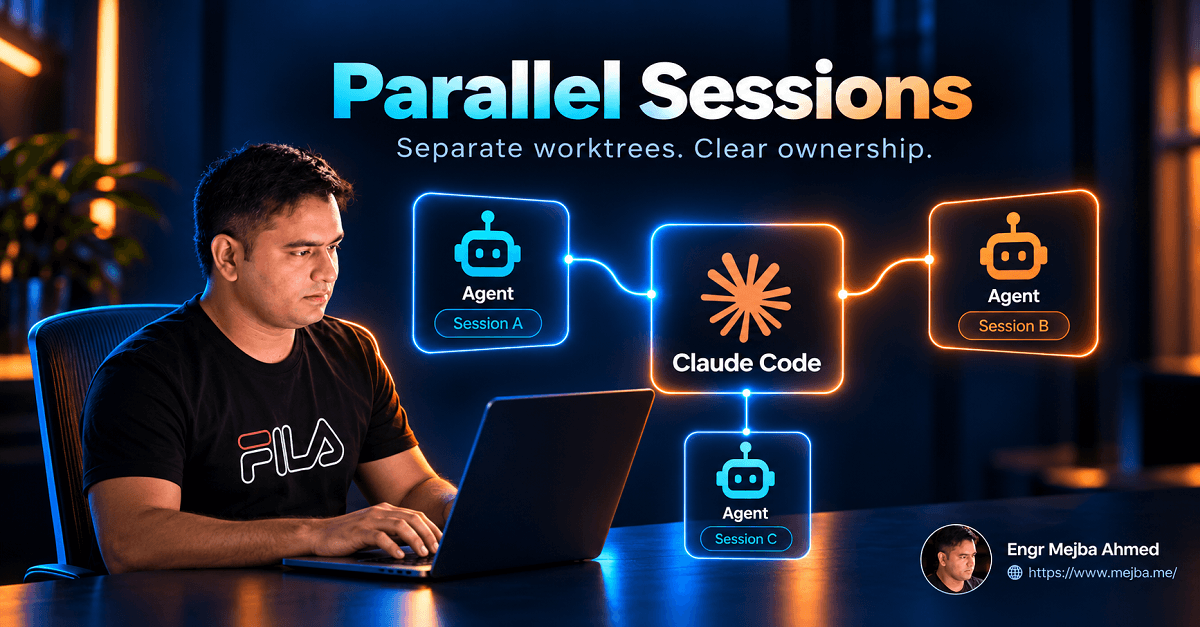
One source of confusion around Claude Code is that "agent" now describes several different execution patterns.
They are not interchangeable.
| Mechanism | Best use | Context | Coordination model |
|---|---|---|---|
| Main session | One primary task | Full conversation | You steer it directly |
| Subagent | Focused side task | Separate context | Returns results to parent |
| Background session | Independent long-running task | Independent session | You monitor it separately |
| Agent team | Coordinated multi-agent project | Separate teammate contexts | Lead + shared tasks + messaging |
| Separate named sessions | Work you started independently | Fully separate sessions | Can coordinate through cross-session messaging |
| Worktree isolation | Prevent file collisions | Separate Git checkout | Files isolated regardless of agent type |
Anthropic's current documentation makes the distinction explicit: subagents are useful when a side task should run in isolated context and return a summary, while agent teams coordinate independent Claude Code instances with shared work and peer communication. Worktrees solve a different problem again by preventing parallel workers from editing the same checkout.
That distinction is important because the best multi-agent setup is usually not:
Spawn as many agents as possible.
It is:
Choose the cheapest coordination mechanism that matches the dependency between the tasks.
If two tasks never need to exchange state, isolated workers are enough.
If they have an explicit dependency, communication becomes useful.
If they are parts of one centrally managed plan, an agent team may fit better.
Cross-Session Messaging Solves a Different Problem
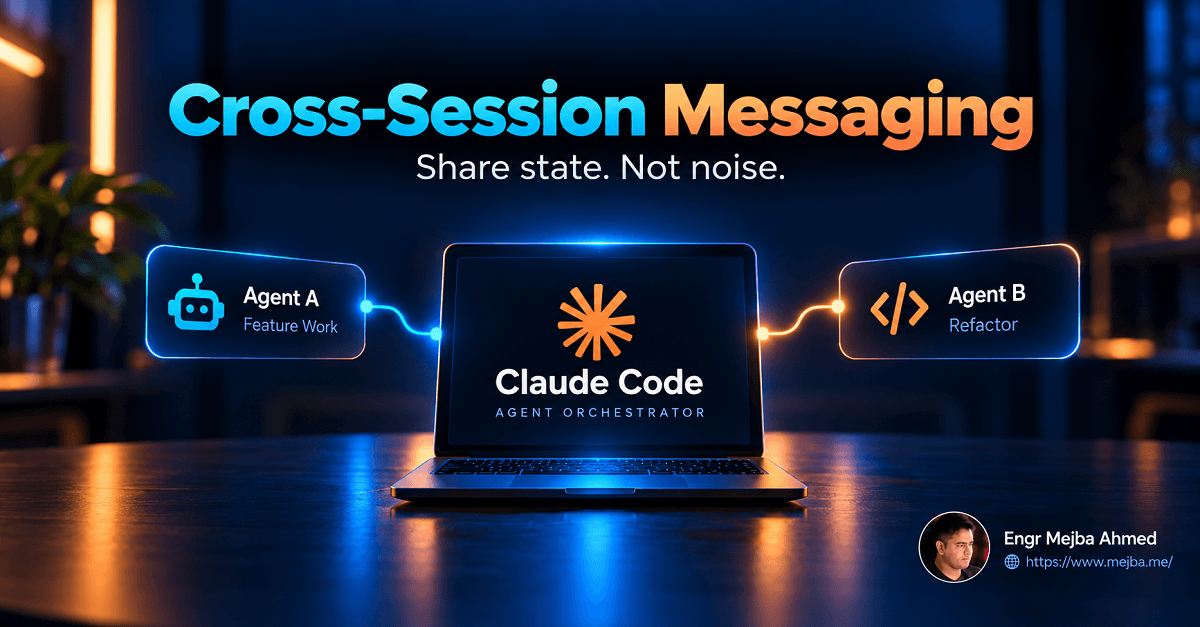
Claude Code v2.1.224, released August 7, added SendMessage and ListAgents, allowing Claude Code sessions to discover and communicate with other sessions. The initial release covered macOS and Linux and also introduced crossSessionInbound and dialogExpiry controls for how incoming peer messages are handled.
This sounds like a small convenience feature.
It is not.
Independent sessions used to share almost nothing except the developer operating them.
If one worker discovered a breaking API change, a failed migration, a renamed type, or an invalid assumption, somebody had to transfer that information manually.
Now one session can tell another.
The crucial distinction is that a cross-session message is communication, not shared memory.
The receiving agent does not suddenly inherit the sender's complete conversation.
That is a good design decision.
A backend worker usually does not need the frontend worker's entire 80,000-token history. It needs the one fact that invalidates its current assumption.
For example:
The migration is complete.

customer_id has been replaced with tenant_id.
The API types on main are now safe to regenerate.
That is much healthier than merging two giant contexts.
The Best Messages Are State Changes, Not Status Updates
The first temptation with agent messaging is to make every worker narrate everything it does.
That creates an expensive group chat.
A better rule is:
Send a message when something another worker currently believes has become false.
Good cross-session messages include:
The endpoint moved from /api/orders to /api/v2/orders.
The migration changed the primary key type from integer to UUID.
The shared interface is committed. Rebase before continuing.
The test failure is caused by the fixture, not the service implementation.
Those messages change another worker's next action.
This is different from:
I'm still working on the migration.
or:
I edited three files.
Those are usually supervision information, not coordination information.
The distinction matters because delivered messages become additional model context and therefore consume attention and usage.
Agent communication should reduce coordination overhead, not create another stream you have to supervise.
Naming Sessions Turns Parallel Work Into Something You Can Reason About
Parallel sessions become easier to operate when each one has one clear job.
Instead of four generic terminals, use roles such as:
claude --name api-worker
claude --name web-worker
claude --name test-worker
claude --name migration-worker
Claude Code also supports naming and resuming sessions as first-class concepts, which makes persistent parallel work easier to manage.
The names matter less than the boundaries.
A useful api-worker should know that it owns:
- backend contracts;
- migrations;
- API behavior;
- backend tests.
A useful web-worker might own:
- frontend implementation;
- API client types;
- components;
- browser behavior.
Once ownership is clear, communication becomes specific.
Without boundaries, two agents working on "the application" tend to duplicate exploration, edit overlapping files, and send vague messages to each other.
That is not orchestration.
That is concurrency without architecture.
Worktrees Are Still the Foundation of Safe Parallel Coding
Agent messaging does not solve file collisions.
Git worktrees do.
Anthropic's current parallel-agent guidance specifically positions worktrees as the isolation mechanism when independent workers may otherwise touch overlapping files. Claude Code Desktop also uses automatic Git worktree isolation for parallel repository sessions.
That produces a useful separation of concerns:
Worktrees isolate files.
Sessions isolate context.
Messages synchronize decisions.
Those three concepts work well together.
Imagine a frontend and backend task running simultaneously.
The backend worker is in one worktree.
The frontend worker is in another.
Neither can accidentally overwrite the other's uncommitted files.
When the API contract changes, the backend worker sends a short message.
The frontend worker then chooses when to rebase or regenerate its types.
That is a much better coordination model than letting two autonomous agents edit the same checkout.
Claude Can Now Notify You When Another Session Finishes
The messaging system continued evolving after its first release.
Claude Code v2.1.236 added notify_when_idle to SendMessage, allowing one local session to request a one-time notification when another session next becomes idle. Anthropic describes this as opt-in and one-shot rather than a polling loop.
That looks minor until you run long tasks.
Without it, supervision often becomes:
Is the migration done yet?
Is the test agent done yet?
Did the build finish?
Is the review ready?
Constant checking destroys much of the benefit of parallel agents.
Event-driven coordination is better.
A worker finishes.
The relevant session receives the event.
You keep working until something actually requires attention.
That pattern is much closer to normal distributed systems than to traditional chat.
Auto Mode Changes Who Handles Routine Permission Decisions
The second major change is autonomy.
Starting August 14, Anthropic made auto mode the default for new Claude Code sessions on Pro, Max, and Team plans, unless the user already had a different default configured.
Instead of asking the developer to approve every qualifying tool action, auto mode sends each action through a classifier designed to identify operations that are destructive, irreversible, or aimed outside the current environment.
Anthropic published unusually concrete evidence for this decision.
In a controlled study involving 1,053 paid professional testers, human reviewers caught 13.6% of deliberately dangerous commands placed into permission prompts.
The auto-mode classifier blocked 89% of the same dangerous actions. Anthropic also reported that human detection worsened as sessions became longer while the classifier's performance did not show the same decline.
That result should not be interpreted as:
Auto mode makes autonomous coding safe.
It means something narrower and more useful:
Repeated confirmation dialogs are a weak security control once approval fatigue sets in.
Auto Mode Is Not a Replacement for Environment Design
The classifier does not know everything your organization knows.
Suppose Claude executes a command that is harmless against a disposable local database but dangerous against a production database reachable with the same CLI.
The syntax of the command may look routine.
The business consequence is not.
That is why I would not build an agent architecture around the assumption that the classifier is your entire security model.
The stronger structure is layered:
Agent capability
        ↓
Permission / auto-mode classifier
        ↓
Sandbox and filesystem boundaries
        ↓
Scoped credentials
        ↓
Git / worktree isolation
        ↓
CI and automated tests
        ↓
Code review
        ↓
Human approval for genuinely high-impact actions
The point of auto mode is to remove low-value interruptions.
It should not remove meaningful trust boundaries.
The 89% Result Also Means 11% Was Not Blocked
This is the part worth keeping visible.
An 89% catch rate is dramatically better than the 13.6% human result in Anthropic's study.
It is still not 100%.
High-impact operations should therefore be structurally difficult for an agent to perform accidentally.
Examples include production database deletion, force pushes to protected branches, changing live DNS, rotating credentials, publishing packages, modifying shared infrastructure, or sending externally visible communications.
The best safety control is often not another confirmation dialog.
It is giving the agent credentials that cannot perform the dangerous action in the first place.
Parallel Agents Make Attention a Scarce Resource
When you supervise one Claude Code session, verbose narration is mostly irritating.
When you supervise five, it becomes operational overhead.
That is why the built-in Concise output style matters more in a multi-session environment than it appears to.
Claude Code v2.1.237 added Concise as a built-in style where Claude leads with results and removes much of the unnecessary preamble and narration while still completing the underlying work.
The important saving is not necessarily tokens.
It is supervisory attention.
When I have multiple workers open, what I need from each pane is usually:
Migration complete.
3 tests failed.
Blocked on API credential.
PR ready for review.
Schema changed.
I do not need every agent narrating how carefully it plans to investigate the issue.
The more parallel the system becomes, the more valuable high-signal output becomes.
Claude Code Desktop Is Becoming the Operations Console
Anthropic's April redesign of Claude Code Desktop is easier to understand in this context.
The app supports multiple parallel sessions, automatic worktree isolation, an integrated terminal, file editing, previews, diff review, local and remote execution, and panes for monitoring work.
That is not just a nicer interface for chat.
It solves an orchestration problem:
How do you supervise several independent software workers without losing track of what each one is doing?
The sidebar becomes a session list.
The diff view becomes inspection.
The terminal becomes manual intervention.
Preview becomes runtime verification.
Remote sessions become long-running workers that can continue after the local machine is closed.
The desktop app is increasingly useful when Claude Code itself is no longer the thing you are watching.
The fleet of sessions is.
Artifacts Extend a Session Beyond Terminal Output
Claude Code artifacts add another interesting layer.
Anthropic introduced them on June 18 as interactive pages that can be generated from a coding session's context—for example, PR walkthroughs, system explanations, dashboards, or release checklists. They can update as the underlying session progresses.
That gives an agent another output surface.
Not every result belongs in:
- a commit;
- terminal prose;
- a Markdown file.
Sometimes the useful output is a visual explanation of what the agent discovered.
For teams, this matters because the person reviewing an agent's work may not be another engineer.
A release manager may need a checklist.
A client may need a visual implementation summary.
A product owner may need a dashboard of what changed.
Turning agent state into a shared artifact reduces another coordination tax: converting technical session history into something another person can consume.
Code Review Is Now Part of the Agent Architecture
Generating more code creates a predictable problem.
Someone still has to verify it.
Anthropic's managed Code Review product runs multiple agents against GitHub pull requests, examines surrounding code, verifies candidate findings, deduplicates them, and posts the resulting issues back to the PR. It is currently positioned as a research preview for Team and Enterprise.
Anthropic reports an average review time of roughly 20 minutes, with typical cost around $15–25 per review, varying with PR size and complexity.
That should not be confused with Claude Code's local review commands.
They solve related problems but operate differently.
A local review is part of the developer's current Claude Code workflow.
Managed Code Review is an organizational GitHub service running review agents against pull requests on Anthropic infrastructure.
That distinction matters for:
- billing;
- permissions;
- data handling;
- triggers;
- deployment architecture;
- team governance.
REVIEW.md Is More Important Than It Looks
Managed Code Review supports a root-level REVIEW.md file containing review-specific instructions.
Anthropic documents it separately from CLAUDE.md.
CLAUDE.md describes the project more broadly.
REVIEW.md controls what the review system should emphasize, ignore, or classify at different severity levels. It is injected directly into the review process with high priority.
This is valuable because generic code review eventually becomes noisy.
A Laravel SaaS application might care deeply about:
Every query involving tenant data must scope by tenant_id.
A payments system might care about:
Flag any path that can create a charge without an idempotency key.
A privacy-sensitive application might require:
Treat logging email addresses, access tokens, or request bodies as Important.
Those rules are far more useful than asking a generic reviewer to "look carefully."
The platform-level insight is the same one that applies to agents generally:
Specialization comes from explicit operating rules, not simply from using a smarter model.
The Real Architecture Is Generate → Verify → Integrate
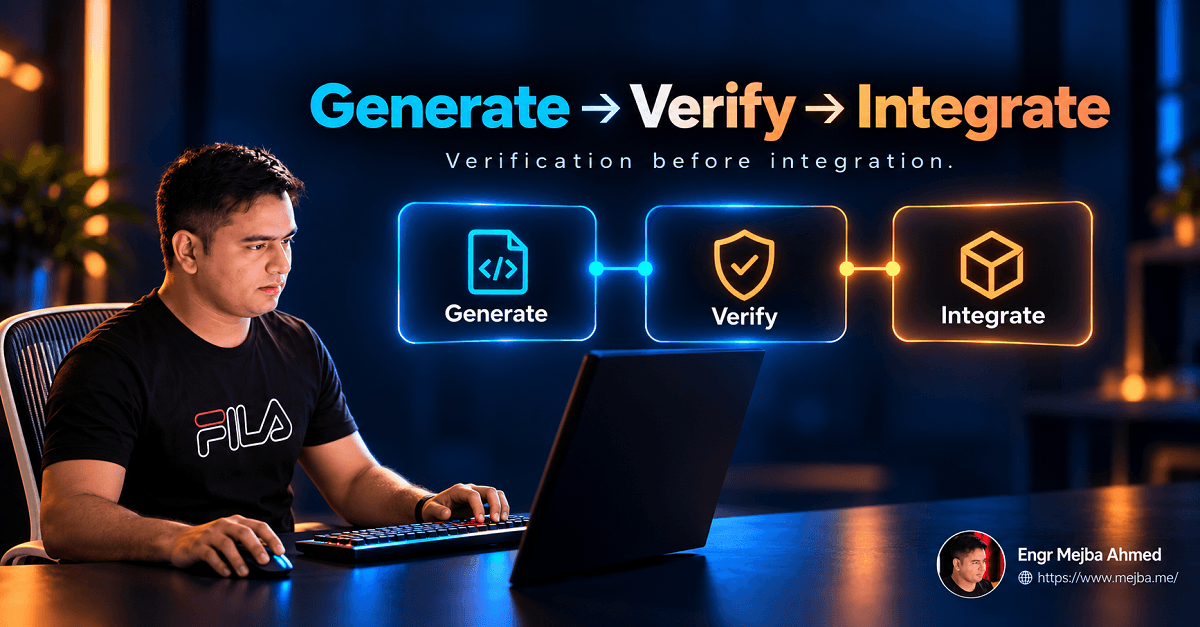
Once multiple agents can work independently, the wrong workflow is:
Agent writes code
        ↓
Merge
A stronger workflow looks like:
Worker session
        ↓
Tests / type checks
        ↓
Independent review
        ↓
Integration worker or human
        ↓
CI
        ↓
Merge
For higher-risk changes you may add security review, staging verification, or a human approval step.
This matters because adding more generators does not automatically increase engineering throughput.
Eventually verification becomes the bottleneck.
Anthropic made this argument explicitly when launching managed Code Review: as AI increased code output internally, review became a limiting factor.
That is exactly what happens when agentic workflows mature.
The problem stops being:
Can AI write this?
It becomes:
Can we confidently determine which generated changes deserve to ship?
More Agents Do Not Automatically Mean More Throughput
Parallelism helps only when the work can actually be separated.
Consider three tasks:
A → B → C
If B requires A's output and C requires B's output, running three agents does not magically make the critical path parallel.
You may create more activity.
You do not shorten the dependency chain.
Now consider:
        → frontend
design  → backend
        → tests
Those branches can often proceed independently after the shared contract is agreed.
That is a good multi-agent candidate.
The architecture therefore begins before Claude.
You need to know:
- which tasks are independent;
- which state must be shared;
- who owns each file or subsystem;
- where synchronization happens;
- what verifies the result.
Without those boundaries, adding agents produces coordination overhead faster than it produces useful code.
Cross-Session Messaging Should Not Become Shared Chat
My current rule is simple:
Agents message each other about contracts, blockers, completed dependencies, or invalidated assumptions.
Not narration.
If one agent owns the database schema and another owns the frontend, a schema change is worth a message.
If a worker merely finished reading ten files, it usually is not.
This gives messages semantic weight.
When a peer message appears, the receiving worker knows something relevant to its execution state has changed.
That is closer to an event bus than Slack.
And that is probably the healthier mental model.
When to Use Subagents Instead
Cross-session messaging is unnecessary for many tasks.
If the main worker needs a one-time answer such as:
Find everywhere this interface is used.
spawn a focused subagent.
The subagent does its search in separate context and returns the result.
No persistent worker is needed.
If the task is:
Implement the entire billing migration independently while I continue working on authentication.
a separate session or background worker makes more sense.
If the task is:
Split this project among multiple coordinated agents and keep their work synchronized.
an agent team may fit better.
The important skill is no longer merely prompting.
It is choosing the correct execution topology.
A Practical Claude Code Agentic Workflow
For a full-stack product, I might divide work like this:
api-worker
Owns Laravel API, migrations, validation, backend tests

web-worker
Owns Next.js UI, client types, frontend tests

qa-worker
Owns integration tests and regression verification

review-worker
Owns independent inspection of completed changes
Each implementation worker gets its own worktree.
The API and web workers communicate only when a shared contract changes.
The QA worker starts once a usable integration point exists.
The review worker should not share responsibility for writing the original change, because independent context helps reduce correlated mistakes.
I remain responsible for architecture, risk decisions, conflicting requirements, and final shipping decisions.
That is the part I do not want agents silently negotiating among themselves.
What Should Stay Human-Controlled?
More autonomy makes it more important to define where autonomy ends.
I would preserve explicit human ownership over:
Irreversible production actions. Database destruction, live infrastructure changes, domain configuration, permanent data changes.
External communication with consequences. Publishing, contacting clients, sending production emails, posting publicly.
Security-boundary changes. Permissions, credentials, production access, secret management.
Ambiguous product decisions. Where multiple valid implementations express different business intent.
Final acceptance for high-risk work. The agent can test and review. Someone accountable should decide that the evidence is sufficient.
The goal is not to keep humans clicking buttons all day.
The goal is to put humans at the decision boundaries where judgment changes the outcome.
The Strongest Setup Is Not the Most Autonomous One
There is a tendency to evaluate agentic coding by asking:
How long can I leave it alone?
That is useful, but incomplete.
I care more about:
How much useful work can it complete while preserving clear boundaries, recoverability, and evidence that the result is correct?
An agent that works unattended for three hours and produces an impossible-to-review 8,000-line diff has not necessarily improved the system.
An agent that makes one isolated change, runs the relevant tests, reports its assumptions, and hands a clean diff to an independent reviewer may be much more useful.
Autonomy is valuable when it makes the workflow less dependent on constant human attention.
It is not valuable when it removes observability.
Claude Code Is Becoming an Orchestration Layer
The individual pieces now look different when viewed together.
Worktrees isolate write access.
Subagents isolate context.
Named sessions isolate responsibilities.
Cross-session messaging transfers important state.
notify_when_idle makes coordination event-driven.
Auto mode reduces repetitive permission interruptions.
Concise output reduces supervision noise.
Desktop gives the operator a multi-session control surface.
Artifacts expose results beyond the terminal.
Code Review provides an independent verification layer.
No individual feature makes Claude Code a platform.
The composition does.
The developer is increasingly moving from:
person typing instructions into an AI coding assistant
toward:
person designing, supervising, and validating a software-production system containing multiple AI workers.
That requires a different engineering skill set.
Prompt engineering still matters.
But so do:
- task decomposition;
- isolation;
- dependency design;
- context management;
- trust boundaries;
- review architecture;
- event-driven coordination;
- observability.
That is much closer to systems engineering.
The Four Rules I Would Start With
If you want to experiment with Claude Code agentic workflows without turning your machine into six agents arguing with each other, start small.
Give every persistent worker one clear ownership boundary.
Put parallel writers in separate worktrees.
Allow communication only for information that changes another worker's next action.
Require verification before integration.
Those four rules matter more than how many agents you can launch.
FAQ
Frequently Asked Questions
Everything you need to know about this topic
Claude Code agentic workflows are development processes in which Claude performs multi-step software tasks using tools such as file reading, editing, shell commands, testing, Git operations, subagents, parallel sessions, and external integrations.
More advanced workflows combine multiple workers with isolation, communication, verification, and human supervision.
Yes.
Claude Code v2.1.224 introduced cross-session SendMessage and ListAgents capabilities, initially for macOS and Linux, so independent Claude Code sessions could discover and message one another. Anthropic also added inbound-message controls through crossSessionInbound and dialogExpiry.
A subagent is usually a focused worker launched from a parent workflow with its own context and returns results to that workflow.
An independent Claude Code session is a separate conversation that you can run and supervise independently.
Anthropic also offers experimental agent teams, where multiple independent Claude Code instances operate as coordinated teammates with a lead and shared work.
If multiple sessions may edit the repository at the same time, worktrees are one of the safest patterns because each worker receives an isolated checkout.
Claude Code's current parallel-agent documentation explicitly recommends worktrees for avoiding overlapping file edits, and Desktop automatically uses worktree isolation for parallel Git sessions.
Anthropic's controlled study found that its auto-mode classifier blocked 89% of planted dangerous commands, while human testers caught 13.6%.
That does not prove auto mode can prevent every harmful action. It shows that repetitive human approval prompts suffer badly from approval fatigue and should not be treated as a complete security boundary.
No.
Auto mode deals primarily with whether a tool action should execute.
It does not determine whether the architecture is correct, whether a business requirement was interpreted properly, whether the resulting code deserves deployment, or whether a production action is acceptable.
Anthropic has a managed GitHub Code Review product for Team and Enterprise organizations that uses multiple agents to inspect pull requests, verify candidate findings, and post results back to GitHub.
Anthropic currently describes it as a research preview, with reviews averaging approximately 20 minutes and generally costing $15–25 depending on the work involved.
Anthropic does not officially describe Claude Code with that exact label.
But from an engineering perspective, Claude Code now contains many platform-like primitives for orchestrating autonomous work: multiple sessions, background workers, subagents, agent teams, worktree isolation, communication, permissions, remote execution, review, extensibility, and shared development surfaces.
That is why I increasingly architect around Claude Code rather than simply prompt it.
The Bottom Line
The most important Claude Code improvement is not that the model can write more code.
It is that the surrounding system can coordinate more work without making the developer manually carry every piece of state between agents.
That changes my role.
I still define the architecture.
I still decide what is safe.
I still review important changes.
But I do not need to be the message bus between every worker.
That is the transition worth paying attention to.
Claude Code agentic workflows are moving from:
AI-assisted coding
to:
AI-orchestrated software delivery.
The teams that benefit most will not necessarily be the teams running the largest number of agents.
They will be the teams that get the boundaries right.
Build Production Agentic Workflows
I work with Claude Code, AI agents, software automation, and production engineering workflows.
If your team wants to move from isolated AI coding sessions to a structured agentic development system, the important work is not simply adding more agents. It is designing task boundaries, Git isolation, communication rules, verification, security controls, and integration points so the agents can actually work together safely.
Let's Work Together
Looking to build AI systems, automate workflows, or scale your tech infrastructure? I'd love to help.
- Fiverr (custom builds & integrations): fiverr.com/s/EgxYmWD
- Portfolio: mejba.me
- Ramlit Limited (enterprise solutions): ramlit.com
- ColorPark (design & branding): colorpark.io
- xCyberSecurity (security services): xcybersecurity.io