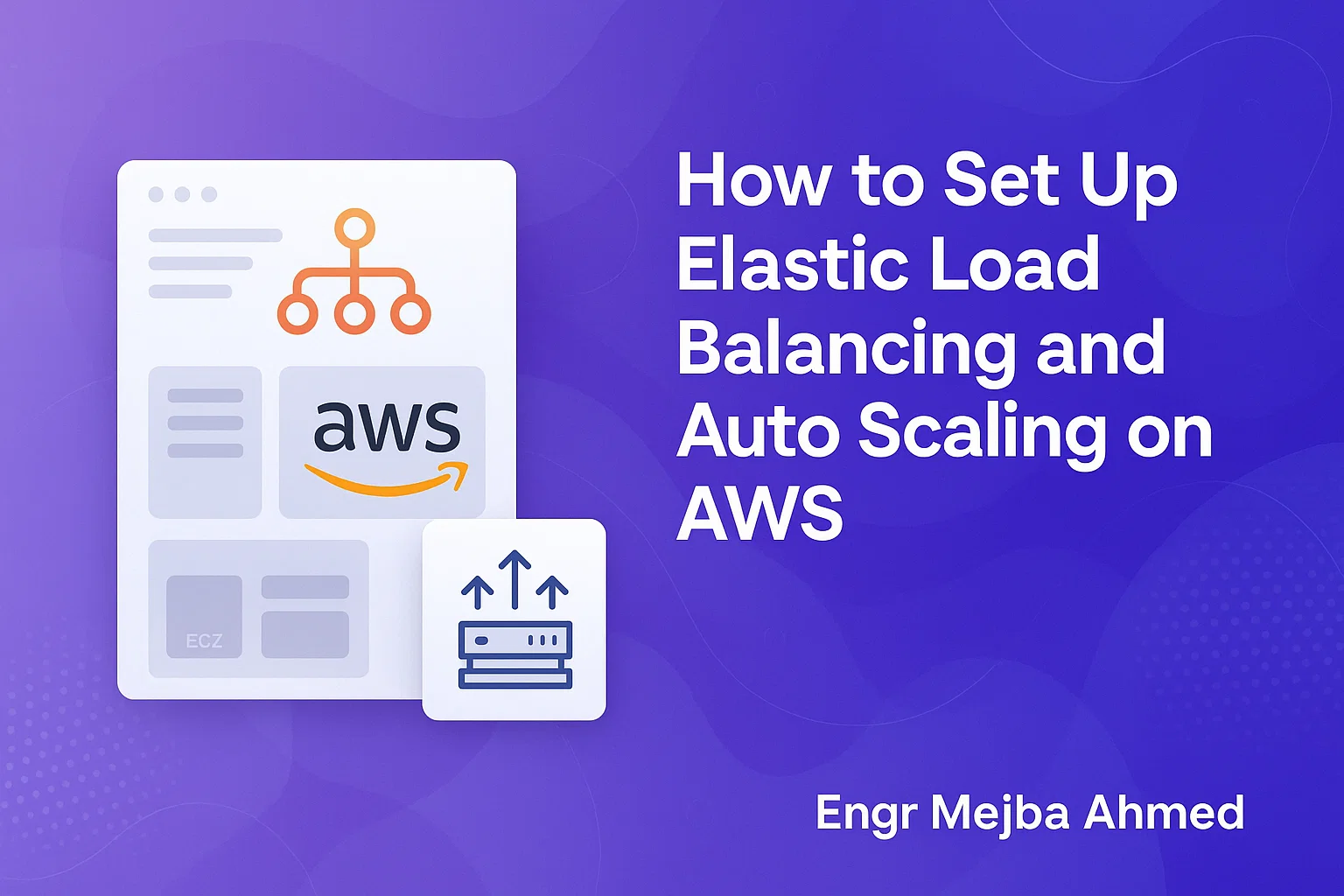
Elastic Load Balancing (ELB) y Auto Scaling son servicios esenciales de AWS que mejoran la disponibilidad, escalabilidad y confiabilidad de tus aplicaciones. En esta guía, aprenderás un método directo y fácil de seguir para integrar Elastic Load Balancing y Auto Scaling con instancias Amazon EC2.
Introducción
Elastic Load Balancing distribuye el tráfico entrante de la aplicación entre múltiples instancias EC2, mejorando el rendimiento y la tolerancia a fallos. Auto Scaling ajusta automáticamente la capacidad de tu servidor según la demanda, manteniendo un rendimiento óptimo y eficiencia de costos.
Requisitos previos
- Cuenta de AWS
- Instancias EC2 configuradas
- Conocimientos básicos de AWS
Paso 1: Configurar tus Instancias EC2
- Inicia sesión en la Consola de Administración de AWS
- Navega a EC2 → Launch Instance
- Configura las instancias (Amazon Linux, Ubuntu, etc.)
- Asigna grupos de seguridad y pares de claves
- Lanza las instancias
Paso 2: Configurar Elastic Load Balancer (ELB)
- Navega a EC2 → Load Balancing → Load Balancers
- Haz clic en "Create Load Balancer"
- Elige el tipo (Application Load Balancer recomendado)
- Configura los puertos de escucha (HTTP/HTTPS)
- Selecciona zonas de disponibilidad y grupos de seguridad
- Configura grupos de destino (instancias EC2)
- Revisa y crea el ELB
Paso 3: Configurar el Grupo de Auto Scaling
- Ve a EC2 → Auto Scaling → Auto Scaling Groups
- Haz clic en "Create Auto Scaling Group"
- Selecciona o crea una Launch Template (define el tipo de instancia, AMI, etc.)
- Especifica las políticas de Auto Scaling (capacidad deseada, mínimo y máximo de instancias)
- Vincula tu Grupo de Auto Scaling al grupo de destino del ELB
- Revisa la configuración y crea el Grupo de Auto Scaling
Paso 4: Probar y Verificar
- Simula carga de tráfico para verificar las políticas de escalado
- Monitorea las métricas de ELB y Auto Scaling desde CloudWatch
- Asegúrate de que las instancias escalen automáticamente según la demanda
Mejores Prácticas
- Monitorea y ajusta regularmente las políticas de escalado
- Configura alarmas de CloudWatch para alertas proactivas
- Optimiza las verificaciones de salud del ELB y la configuración de seguridad
Conclusión
Has configurado exitosamente Elastic Load Balancing y Auto Scaling en AWS EC2. Esta integración mejora la escalabilidad, disponibilidad y confiabilidad de tu aplicación, asegurando una experiencia de usuario fluida y una utilización óptima de recursos.